
Choosing the Best Nails for Privacy Fence Pickets and Long Lasting Results
Choosing the Right Nails for Privacy Fence Pickets
Building a privacy fence is a fantastic way to enhance your property's security and aesthetic appeal. However, the success of your fence relies heavily on using the correct nails for privacy fence pickets. Choosing the wrong nails can lead to structural weaknesses, premature deterioration, and ultimately, a fence that doesn't last. This comprehensive guide will explore the different types of nails, factors to consider when selecting them, and how to ensure a strong, durable fence. We’ll delve into the specifics of galvanized, stainless steel, and ring shank nails, helping you make the best decision for your project.

Understanding the Types of Nails for Fence Building
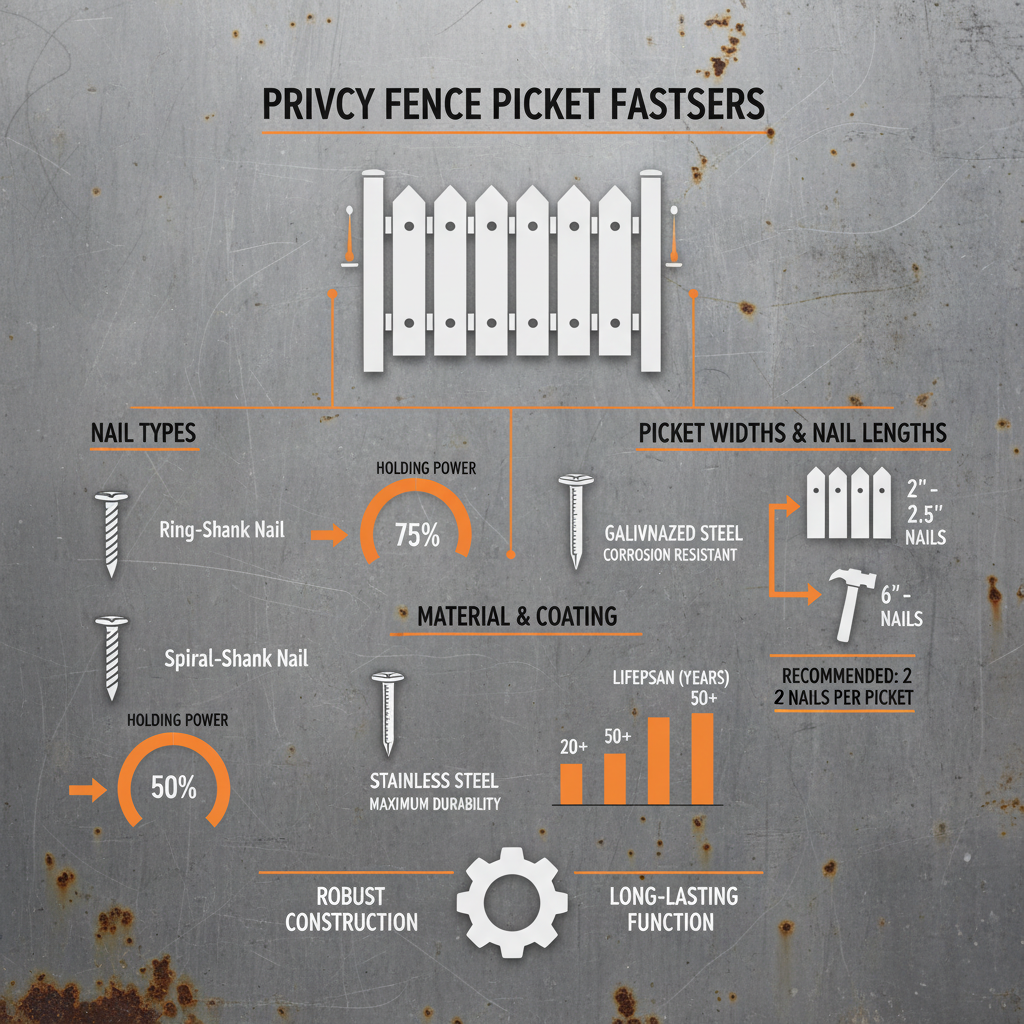
Several types of nails are commonly used for fence construction. Each has unique properties making them suitable for different environments and wood types. Common nails are the most basic and least expensive, but are prone to rust and may not provide enough holding power for heavier fences. Box nails are similar but have a thinner shank, making them easier to drive but also less strong. Galvanized nails are coated with zinc to resist rust, making them a better choice for outdoor use. Ring shank nails are designed with rings along the shank to increase holding power, and are highly recommended for fence building. Finally, stainless steel nails offer the best corrosion resistance, ideal for coastal areas or when using treated lumber. Choosing the right type is crucial for long-term durability.
Key Takeaway: For privacy fences, prioritize corrosion resistance and holding power. Galvanized or stainless steel ring shank nails are generally the best options.
Galvanized vs. Stainless Steel: A Detailed Comparison
When deciding between galvanized and stainless steel nails, consider your climate and the type of wood you’re using. Galvanized nails offer good corrosion resistance at a more affordable price point. However, the zinc coating will eventually wear away, particularly in harsh environments. Stainless steel nails, while more expensive, provide superior long-term corrosion resistance, making them ideal for coastal areas, treated lumber, or locations with high humidity. The initial investment is higher, but the longevity and reduced risk of rust make them a cost-effective choice in the long run. Using high-quality stainless steel nails ensures a lasting fence.
Galvanized vs. Stainless Steel:
• Cost: Galvanized is significantly cheaper.
• Corrosion Resistance: Stainless steel offers superior resistance.
• Longevity: Stainless steel lasts longer, especially in harsh climates.
• Best Use: Galvanized for general use, Stainless steel for coastal/treated lumber.
The Importance of Ring Shank Nails for Privacy Fences
Unlike smooth shank nails, ring shank nails have rings along the shank that create a mechanical interlock with the wood fibers. This dramatically increases their holding power and resistance to pull-out, which is vital for a fence that will withstand wind, weather, and potential impacts. Smooth shank nails rely solely on friction, which can diminish over time as the wood expands and contracts. Ring shank nails are particularly important when using hardwoods or treated lumber, which can be more challenging to fasten securely. Investing in ring shank nails is a small price to pay for a significantly stronger and more durable fence.
Choosing the Right Nail Length and Gauge
Selecting the appropriate nail length and gauge is just as important as choosing the right type of nail. For privacy fence pickets, a nail length of at least 2.5 to 3 inches is generally recommended to ensure sufficient penetration into the fence posts. The gauge (thickness) of the nail also matters; a thicker gauge provides greater holding power but requires more force to drive. A common size for privacy fences is 8d (2.5 inches) or 10d (3 inches) nails with a gauge of around 0.120 inches. Always consider the thickness of your pickets and posts when determining the optimal nail length and gauge. Using too short a nail won’t provide adequate hold, while too long a nail could split the wood.
Final Thoughts: Investing in Quality for a Lasting Fence
Building a privacy fence is a significant investment, and using the right nails is a crucial step in ensuring its longevity and structural integrity. Prioritize corrosion resistance, holding power, and appropriate length and gauge when making your selection. Don't compromise on quality – choosing premium nails from a reputable supplier like Iron Wire Factory will save you time, money, and frustration in the long run. A well-built fence not only enhances your property's appearance but also provides years of security and privacy.
Frequently Asked Questions (FAQs)
How many nails should I use per picket?
Generally, using at least two nails per picket per post is recommended for a secure connection. For taller or wider pickets, or in areas with high wind exposure, consider using three or more nails per picket. Ensure nails are evenly spaced along the picket's length for even distribution of stress. Over-nailing can also split the wood, so finding the right balance is important. Proper nail spacing contributes to the overall stability of the fence.
Can I use a nail gun for my fence project?
Yes, a nail gun can significantly speed up the fence building process. However, ensure the nail gun is compatible with the type and gauge of nails you’re using. Using the correct air pressure and adjusting the depth setting are crucial to prevent damage to the wood. Always prioritize safety and wear appropriate eye protection when using a nail gun. While convenient, a nail gun doesn't replace the need for proper nail selection and technique.
What should I do if a nail bends over while driving it in?
If a nail bends over while driving it in, stop immediately. Attempting to force a bent nail can damage the wood and potentially cause injury. Use a nail puller or claw hammer to carefully remove the bent nail. Then, select a new nail and try again, ensuring you're driving it in straight and at the correct angle. Sometimes pre-drilling a small pilot hole can help prevent bending, especially with hardwoods.
Are coated deck screws a suitable alternative to nails?
While coated deck screws can provide excellent holding power, they are generally more expensive than nails and require more time to install. However, for added strength and longevity, particularly with hardwoods or in demanding climates, screws are a viable alternative. Ensure you use screws specifically designed for exterior use and pre-drill pilot holes to prevent splitting the wood.
-
Professional Guide to Choosing Nails for Wooden Fence PanelsNewsApr.16,2026
-
PING HONGLIN WIRE MESH CO.,LTD: African Clients Visit Factory, Deepen Cooperation to Build a Global Quality BenchmarkNewsApr.14,2026
-
Guide to Choosing the Best nails for wood trim for CarpentryNewsApr.09,2026
-
Recognized for Excellence: ANPING HONGLIN WIRE MESH Named Alibaba FY2026 TOP Transaction Merchant, Celebrating 35 Years of Manufacturing HeritageNewsApr.07,2026
-
HONGLIN WIRE MESH Showcases at WORLDBEX Philippines 2026, Earning Strong Recognition from Global Builders & DistributorsNewsApr.07,2026
-
Spanish Client Delegation Visits Our Factory for Exchange, Exploring New Cooperation Opportunities in Welded Wire ProductsNewsApr.07,2026


