
Durable Barbed Wire & Galvanized Fencing Solutions
Introduction to Advanced Perimeter Security Solutions
In the realm of B2B security and demarcation, the efficacy and reliability of physical barriers are paramount. Among the most enduring and universally recognized solutions is barbed wire. This article delves into the intricate details of modern barbed wire technology, offering a comprehensive overview for B2B decision-makers and engineering professionals. We will explore its manufacturing precision, advanced material science, diverse application scenarios, and strategic advantages, ensuring an informed perspective on its deployment in critical infrastructure, agricultural, and security sectors globally.
Our focus extends to demonstrating how high-quality barbed wire, engineered to rigorous international standards, serves as a cornerstone for robust perimeter protection, offering both a formidable physical deterrent and a clear psychological barrier against unauthorized access.
Precision Manufacturing Process of Barbed Wire
The manufacturing of high-performance barbed wire is a meticulous process demanding precision engineering and stringent quality control. It begins with the careful selection of raw materials and progresses through several sophisticated stages to yield a product capable of enduring harsh environmental conditions and significant physical stress.
1. Raw Material Sourcing & Preparation
The foundational material for barbed wire is high-quality steel wire, typically low-carbon steel (e.g., Q195, Q235) for standard applications or high-tensile steel for enhanced security. These materials are chosen for their optimal balance of ductility and strength. The wire undergoes initial drawing to achieve the precise diameters required for both the line wire and the barb wire components.
2. Wire Galvanization
To ensure superior corrosion resistance, the wire undergoes galvanization. This can be achieved through two primary methods:
- Hot-Dip Galvanization: Wires are immersed in a bath of molten zinc, creating a thick, durable, and highly adherent zinc coating. This method offers extended service life, particularly critical for galvanized barbed wire deployed in corrosive environments such as coastal regions or industrial zones.
- Electro-Galvanization: A thinner zinc coating is applied through an electrolytic process. While offering good protection, it is generally less robust than hot-dip galvanization, suitable for applications where extreme longevity is not the primary concern.
3. Barb Forming and Wire Twisting
Specialized machinery, often utilizing CNC precision, forms the distinctive barbs from smaller wire segments. These barbs are then mechanically attached to the line wire(s). The twisting process is critical:
- Single Strand Twist: A single line wire with barbs twisted around it.
- Double Strand Twist (Conventional): Two line wires twisted together, with barbs affixed at regular intervals. This provides enhanced strength and stability.
- Double Strand Reverse Twist: Two line wires twisted in opposite directions, interlocking the barbs more securely and significantly increasing the fence's resistance to cutting and unraveling. This is preferred for high-security barbed wire fence applications.
4. Quality Control & Testing Standards
Throughout the process, rigorous testing is conducted to ensure compliance with international standards such as ASTM A121 (Standard Specification for Zinc-Coated (Galvanized) Steel Barbed Wire) and EN 10223-1. Key tests include:
- Tensile Strength Test: To verify the wire's resistance to breaking under tension.
- Zinc Coating Mass Test: Ensures the galvanization thickness meets specified requirements for optimal corrosion resistance.
- Barb Spacing and Length Accuracy: Critical for consistent deterrent efficacy.
- Adhesion Test: To confirm the zinc coating's integrity and adherence to the steel substrate.
5. Coiling and Packaging
Finished barbed wire is precisely coiled into specified lengths and weights, then securely packaged to prevent damage during transit and storage. This ensures that the product arrives in optimal condition, ready for deployment.
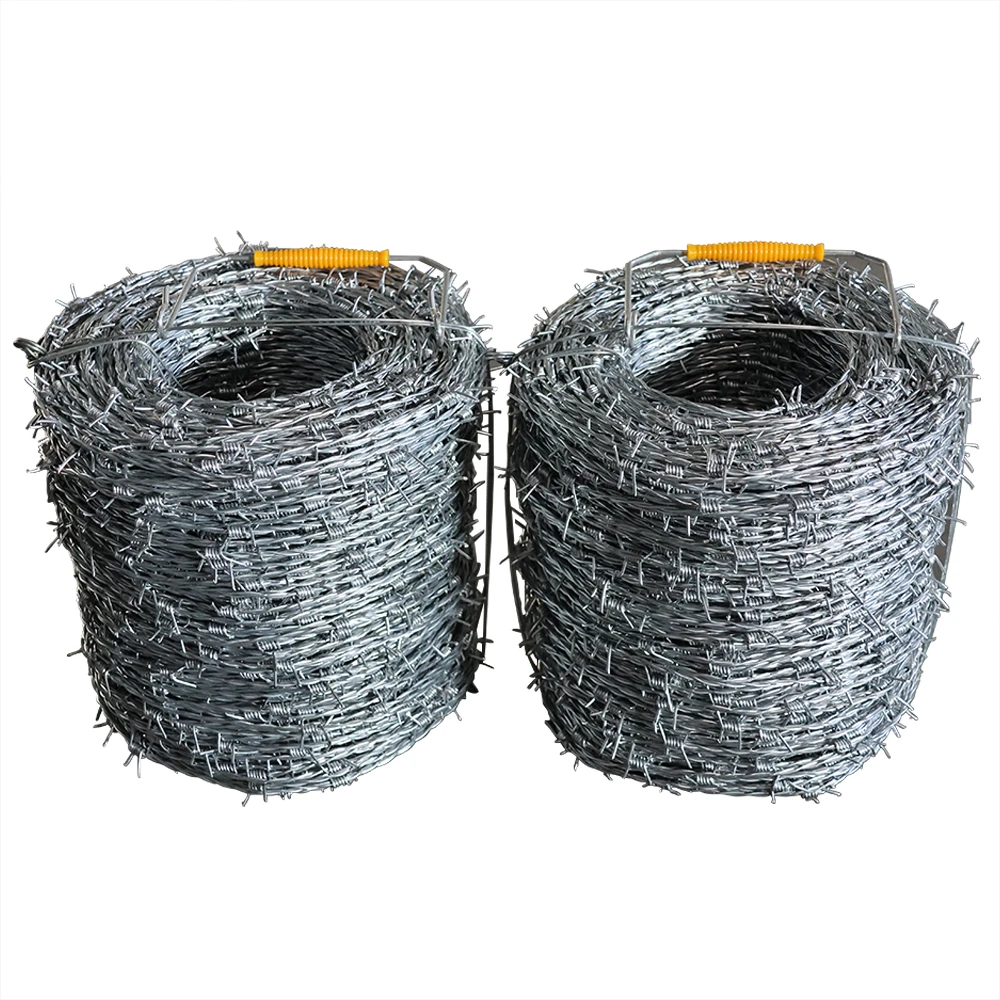
This detailed process ensures that the final barbed wire product offers exceptional service life, typically ranging from 10 to 25 years for heavily galvanized variants, depending on environmental exposure. It is crucial for target industries such as petrochemical, metallurgy, water supply & drainage, and general industrial security, where corrosion resistance and long-term reliability are paramount.
Industry Trends in Barbed Wire Technology
The market for barbed wire continues to evolve, driven by increasing demands for enhanced security, sustainability, and integration with advanced systems. Key trends reflect an industry moving towards more specialized and high-performance solutions:
- High-Security Integration: Modern installations frequently combine barbed wire fence with electronic security systems, such as CCTV, intrusion detection sensors, and access control, to create multi-layered protection zones for critical infrastructure.
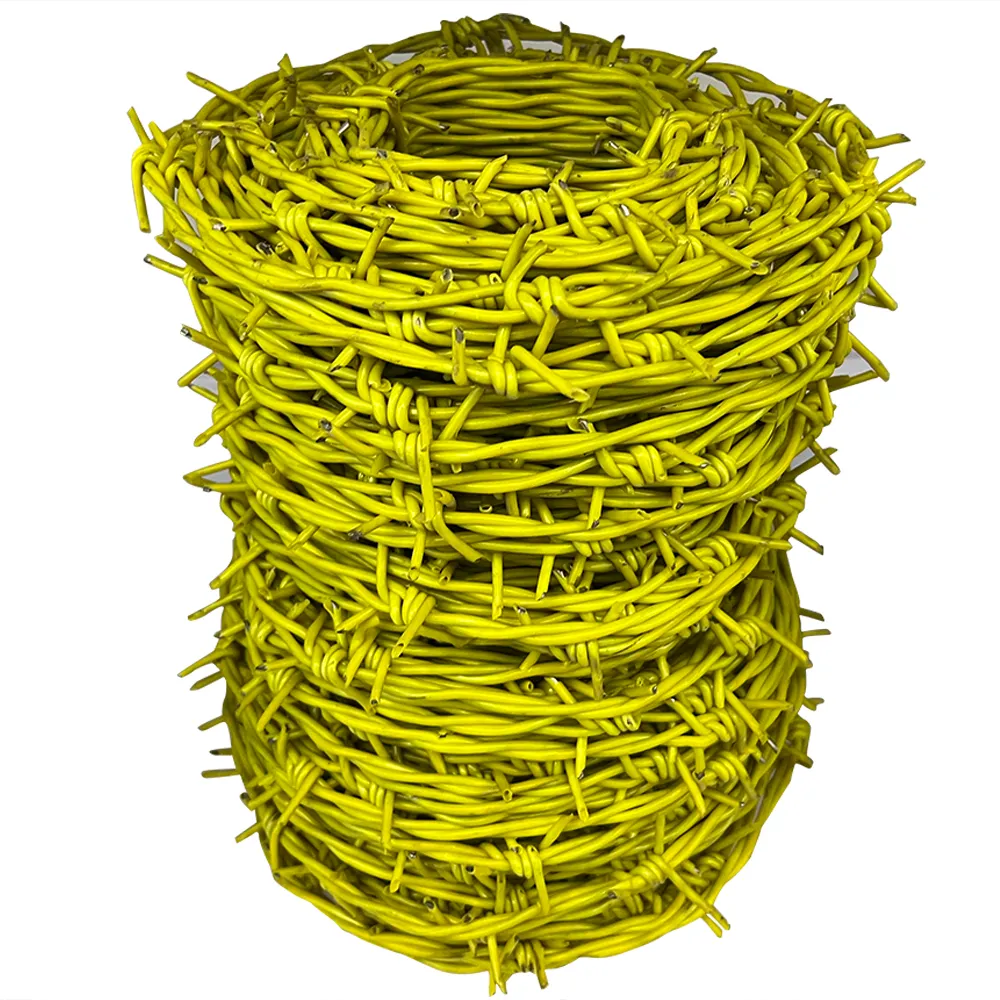
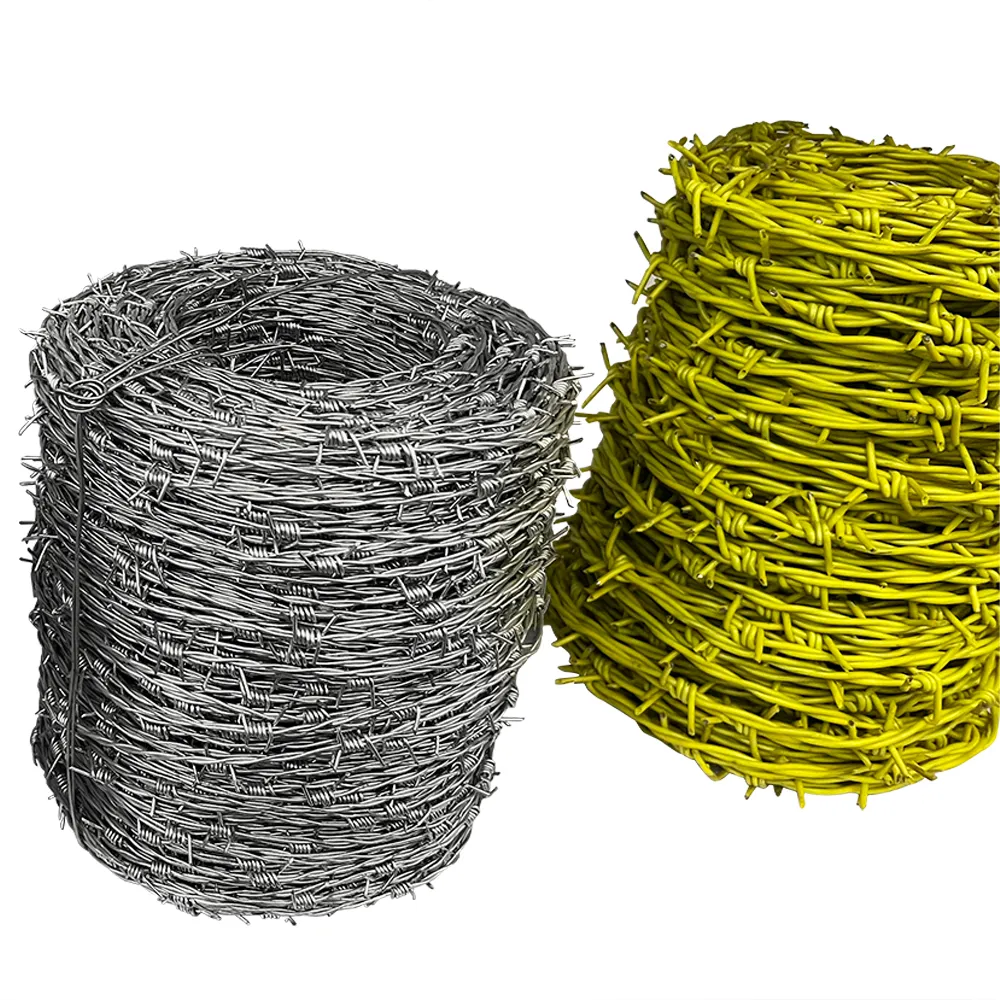
- Advanced Corrosion Protection: Beyond standard galvanization, there's growing interest in PVC-coated barbed wire for aesthetic reasons, specific chemical resistance, or extended lifespan in extremely harsh environments. Suppliers are also exploring duplex coatings and alloy options.
- Sustainable Practices: Manufacturers are increasingly adopting greener production methods and sourcing recycled content for steel wire, aligning with global environmental objectives. The focus is on products with longer service lives to reduce replacement frequency and waste.
- Customization for Niche Applications: The demand for tailored solutions, including specific wire gauges, barb configurations, and coil dimensions, is on the rise, particularly from industries requiring specialized perimeter defense. This includes options for various barbed wire price points depending on specifications.
- Global Supply Chain Optimization: Leading barbed wire suppliers are investing in robust logistics and distribution networks to ensure timely delivery and competitive pricing across international markets, adapting to fluctuating raw material costs and trade policies.
These trends highlight an industry committed to innovation, providing more resilient, intelligent, and environmentally responsible security solutions.
Technical Specifications and Parameters
Understanding the technical specifications of barbed wire is crucial for selecting the appropriate product for specific security requirements. These parameters dictate the strength, durability, and effectiveness of the barrier.
Key Technical Parameters:
- Wire Gauge (SWG/BWG): Denotes the diameter of the line wire and barb wire. Lower gauge numbers indicate thicker wires, providing greater strength and resistance to cutting.
- Barb Spacing: The distance between individual barb clusters along the line wire. Common spacings include 75mm (3 inches), 100mm (4 inches), and 125mm (5 inches). Tighter spacing enhances deterrent capability.
- Barb Length: The length of each sharp barb point. Longer barbs increase the deterrent effect.
- Number of Points: Typically 2-point or 4-point barbs. 4-point barbs offer a more aggressive deterrent.
- Tensile Strength: Measured in N/mm² or PSI, this indicates the force required to break the wire. High-tensile barbed wire offers superior resistance to tampering.
- Zinc Coating Mass: Expressed in g/m², this measures the thickness of the galvanized layer, directly correlating to the product's corrosion resistance and lifespan. Standards often specify minimum coating masses for galvanized barbed wire.
- Roll Length & Weight: Standard coil lengths vary (e.g., 200m, 250m, 500m), impacting ease of installation and logistical planning.
Typical Product Specification Table:
| Parameter | Standard (ASTM A121/A121M-17) | High-Tensile Galvanized Barbed Wire | Standard Galvanized Barbed Wire |
|---|---|---|---|
| Line Wire Diameter | Min. 2.00 mm (14 BWG) | 2.50 mm (12.5 BWG) | 2.00 mm (14 BWG) |
| Barb Wire Diameter | Min. 1.80 mm (15.5 BWG) | 2.00 mm (14 BWG) | 1.80 mm (15.5 BWG) |
| Barb Spacing | 75mm to 150mm | 75 mm (3 inches) | 100 mm (4 inches) |
| Number of Barbs | 2 or 4 points | 4 points | 2 points |
| Tensile Strength (Line Wire) | Min. 250 MPa (36 ksi) | Min. 1000 MPa (145 ksi) | Min. 345 MPa (50 ksi) |
| Zinc Coating Mass (Class 3) | Min. 245 g/m² | 275 g/m² | 245 g/m² |
| Coil Length | As specified by customer | 200m or 250m | 200m or 500m |
Note: Specifications may vary based on specific product lines and customer requirements.
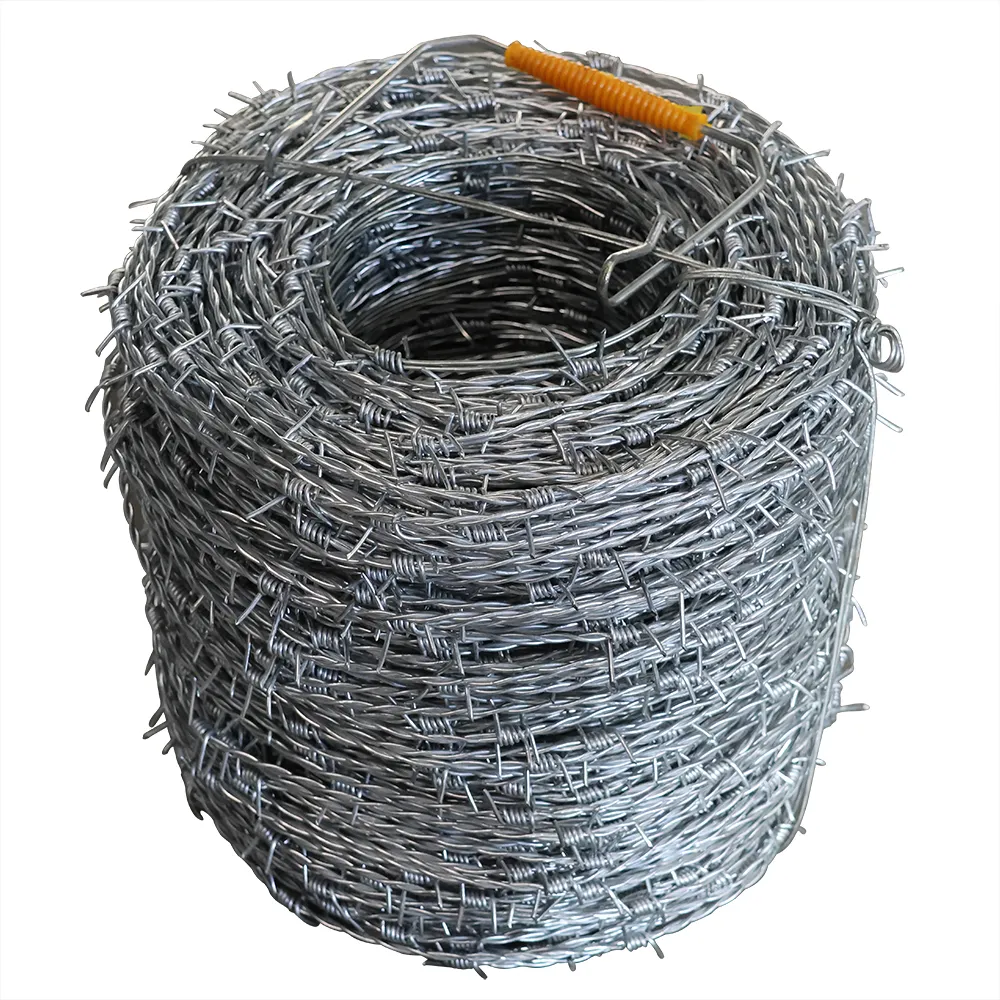
Careful consideration of these technical details ensures that the chosen barbed wire product aligns precisely with the project's security objectives and budget, optimizing both performance and cost-effectiveness.
Diverse Application Scenarios
The versatility of barbed wire allows for its effective deployment across a wide array of sectors, serving diverse security and demarcation needs. Its inherent design as a formidable physical and psychological barrier makes it indispensable in numerous applications.
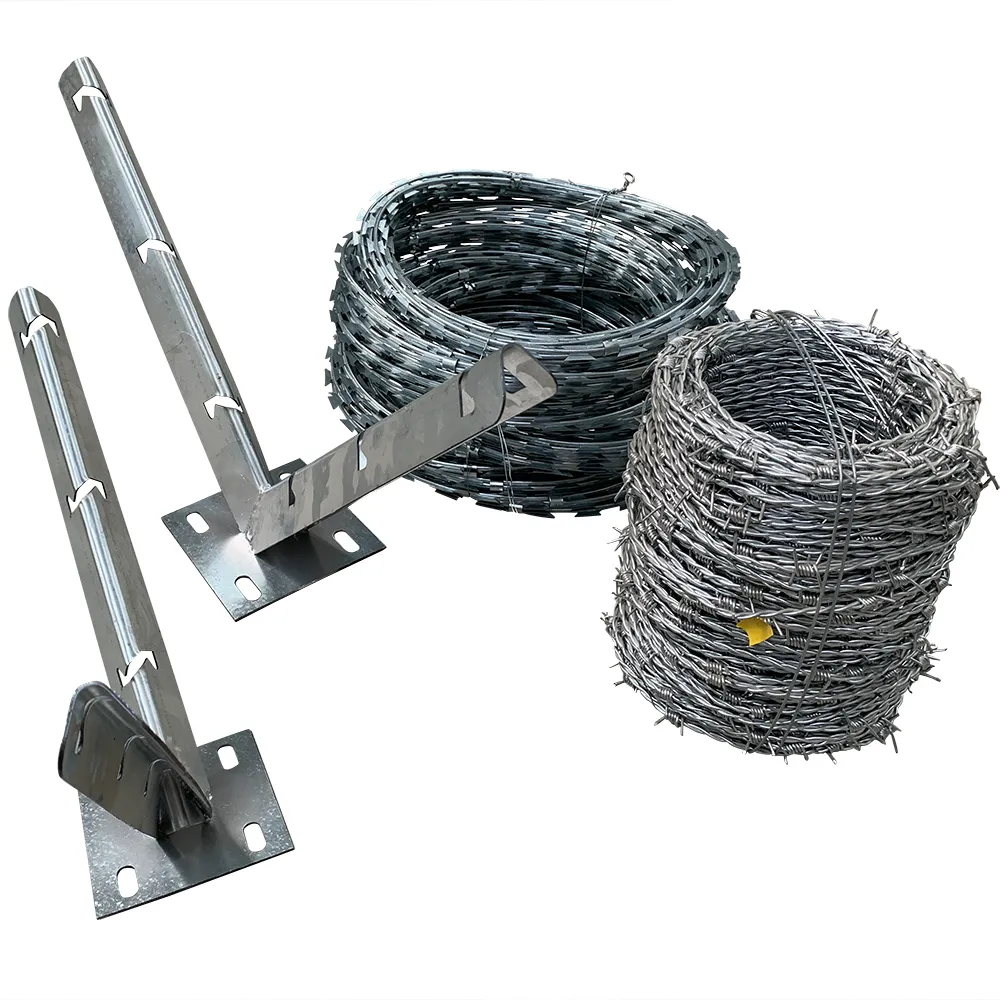
- High-Security Perimeters: Vital for critical infrastructure such as military installations, power plants, airports, government facilities, and correctional institutions. Here, high-tensile, reverse-twist galvanized barbed wire is often used in conjunction with chain link or welded mesh fences to create an impenetrable barrier.
- Agricultural & Livestock Control: Essential for defining property boundaries and containing livestock on farms and ranches. A durable barbed wire fence helps prevent animal escapism and deters predatory wildlife or trespassers, making it a cost-effective choice for land management.
- Industrial & Commercial Security: Securing construction sites, warehouses, manufacturing plants, and industrial parks against theft and unauthorized entry. Its ease of installation and relatively low barbed wire price make it a preferred choice for temporary or permanent site security.
- Border & Boundary Demarcation: Used globally to mark national or property borders, especially in remote or challenging terrains where other fencing solutions might be impractical.
- Oil & Gas Facilities: Protecting remote pipelines, pumping stations, and refinery perimeters from vandalism and sabotage. Corrosion resistance is paramount in these environments, often necessitating heavily galvanized or PVC-coated options.
- Water Supply & Drainage Infrastructure: Safeguarding reservoirs, treatment plants, and pumping stations from public access, ensuring water quality and operational integrity.
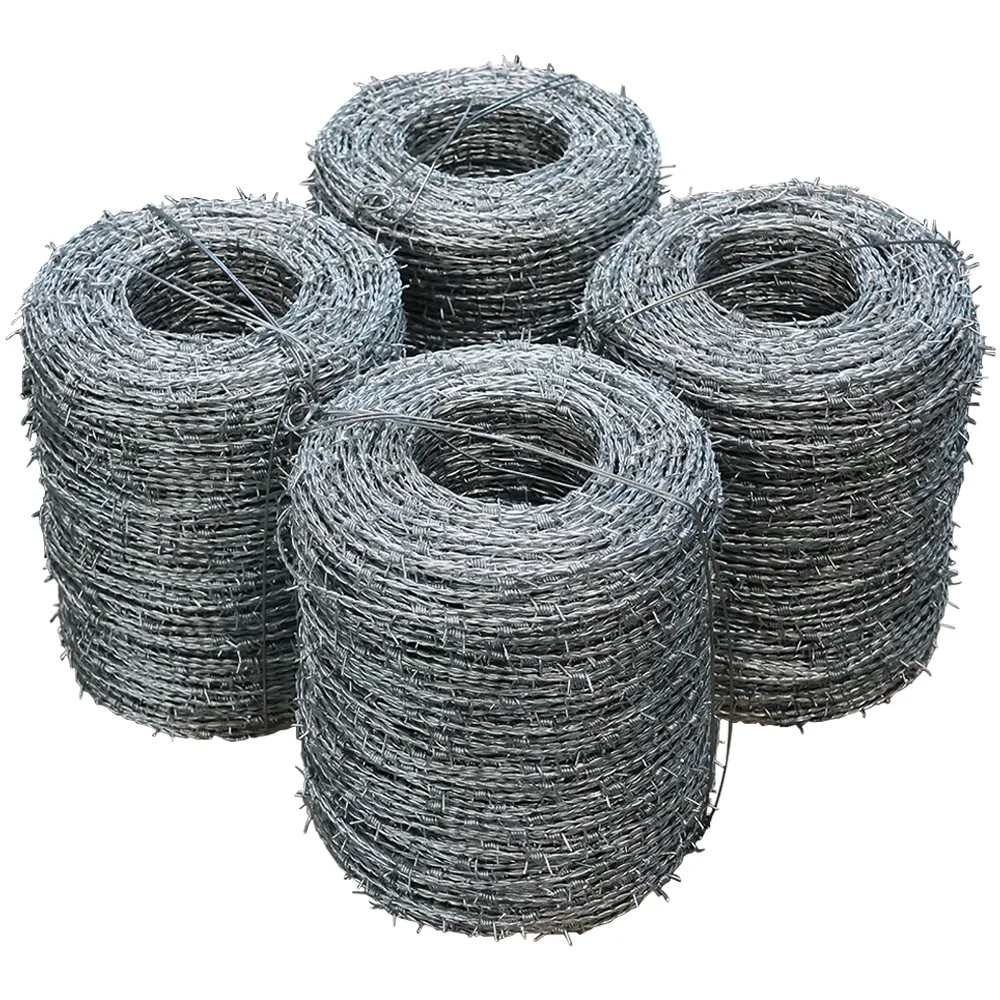
In each scenario, the selection of the correct barbed wire type, gauge, and coating is critical to ensure optimal performance, longevity, and adherence to specific security protocols and environmental conditions.
Technical Advantages of High-Quality Barbed Wire
High-quality barbed wire offers a distinct set of technical advantages that make it a cornerstone of effective perimeter security:
- Superior Deterrence: The sharp barbs provide an immediate and undeniable physical deterrent, discouraging attempts at climbing or breaching. The psychological impact of a barbed barrier is also significant.
- Exceptional Corrosion Resistance: Premium galvanized barbed wire features heavy zinc coatings (e.g., Class 3 per ASTM A121), significantly extending its service life even in challenging weather conditions, saltwater environments, or industrial atmospheres. This translates to reduced maintenance and replacement costs over time.
- High Tensile Strength: Manufactured from high-grade steel, the wire resists cutting tools and tampering attempts. High-tensile variants are particularly resilient, making them extremely difficult to cut with standard hand tools.
- Cost-Effectiveness: Compared to many advanced security fencing systems, the barbed wire price point offers an excellent balance of security efficacy and economic viability for both initial installation and long-term maintenance.
- Versatility and Adaptability: Easily installed on various terrains, including uneven ground, and can be integrated with existing fencing structures (e.g., chain link, mesh, walls) to enhance security without requiring a complete overhaul. It is available in different strand configurations (single, double, reverse twist) to suit specific security levels.
- Rapid Deployment: Relatively simple and quick to install, making it suitable for both permanent and temporary security solutions where rapid setup is required.
These advantages collectively underscore why barbed wire remains a preferred choice for robust and reliable perimeter protection in critical B2B applications.
Vendor Comparison and Selection Criteria
Selecting the right barbed wire suppliers is a critical decision for B2B procurement, impacting project timelines, budget, and long-term security efficacy. A thorough comparison requires evaluating several key aspects beyond just the barbed wire price.
Key Vendor Evaluation Criteria:
- Product Quality & Compliance: Verify adherence to international standards (e.g., ASTM A121, EN 10223-1) and certifications (e.g., ISO 9001). Request material test reports and galvanization certificates.
- Manufacturing Capabilities: Assess if the supplier has modern manufacturing processes (e.g., CNC precision) and the capacity to meet large-scale or customized orders.
- Customization Options: Evaluate their ability to provide tailored solutions regarding wire gauge, barb configuration, coating type, and coil dimensions.
- Lead Times & Logistics: Understand typical production and delivery lead times, shipping options, and global distribution capabilities.
- After-Sales Support & Warranty: Inquire about technical support, warranty commitments against manufacturing defects or coating failures, and responsiveness to inquiries.
- Reputation & Experience: Research client testimonials, case studies, years in service, and major clients to gauge reliability and expertise.
Comparative Analysis of Barbed Wire Suppliers (Illustrative):
| Feature | Supplier A (Typical) | Supplier B (Premium) | Our Company (IronWireFactory.com) |
|---|---|---|---|
| Adherence to ASTM A121 | Basic Compliance | Strict Compliance, Class 3+ | Exceeds Class 3 Standards |
| Galvanization Type | Electro-galvanized or Light Hot-Dip | Heavy Hot-Dip | Heavy Hot-Dip (Min. 275 g/m²) |
| Tensile Strength Options | Standard | Standard & High-Tensile | Comprehensive Range (Std. to Ultra High-Tensile) |
| Customization Lead Time | 4-6 Weeks | 3-5 Weeks | 2-4 Weeks (Expedited Options Available) |
| Warranty Period | 1 Year (Limited) | 3-5 Years (Comprehensive) | 5-10 Years (Extensive Corrosion & Manufacturing) |
| Global Shipping | Regional Only | Limited International | Worldwide Logistics Network |
By systematically evaluating these factors, B2B clients can make an informed decision, ensuring they partner with barbed wire suppliers who can deliver products that meet stringent quality and performance expectations for their specific applications.
Customized Barbed Wire Solutions
Recognizing that no two security challenges are identical, leading barbed wire suppliers offer customized solutions tailored to specific project requirements. This bespoke approach ensures optimal performance and cost-efficiency for unique applications.
Customization options can include:
- Wire Gauge and Material: From standard low-carbon steel for general-purpose barbed wire fence to high-tensile steel for maximum cut resistance in high-security zones.
- Barb Configuration: Specifying 2-point or 4-point barbs, as well as customized barb spacing (e.g., tighter spacing for enhanced deterrent).
- Coating Options: Beyond standard heavy galvanized barbed wire, specialized PVC or powder coatings can be applied for unique environmental resistance, aesthetic requirements, or enhanced longevity.
- Coil Lengths and Weights: Manufacturing coils to specific lengths and weights to facilitate easier installation on large projects or to meet particular logistical constraints.
- Packaging: Customized packaging solutions, including specific coil diameters, palletization, or bulk shipments, to streamline on-site handling and deployment.
By collaborating closely with clients, our engineering teams develop precise specifications that address environmental factors, threat assessments, and budget considerations, delivering a truly optimized barbed wire solution.
Application Case Studies
Case Study 1: Perimeter Upgrade for a Major Petrochemical Complex
Challenge: A large petrochemical complex located in a coastal region required an immediate upgrade to its perimeter security. Existing fencing was showing signs of corrosion due to saline air, compromising security integrity. The solution needed exceptional corrosion resistance, high deterrence, and minimal maintenance.
Solution: We supplied over 50 kilometers of heavy-duty, reverse-twist, Class 3+ galvanized barbed wire with a line wire diameter of 2.50mm and 4-point barbs at 75mm spacing. The enhanced zinc coating mass (exceeding 275 g/m²) was specified to withstand the aggressive coastal environment. This was installed atop existing mesh fencing, creating a formidable, durable barrier.
Outcome: The project significantly enhanced the site's security posture. The advanced galvanization ensured superior corrosion resistance, projecting a service life exceeding 20 years, drastically reducing maintenance cycles and costs. The client reported a noticeable decrease in unauthorized perimeter approaches. Customer feedback highlighted the "uncompromising quality and longevity" of the supplied barbed wire.
Case Study 2: Agricultural Perimeter for Large-Scale Livestock Operation
Challenge: A large cattle ranch in a remote, undulating terrain needed a cost-effective yet robust barbed wire fence solution to contain thousands of head of cattle and deter trespassers. The primary concerns were durability against animal pressure, resistance to weathering, and ease of installation over varied topography.
Solution: We provided standard 2-point, 12.5 BWG double-strand galvanized barbed wire with 125mm barb spacing, supplied in 500-meter rolls. This configuration offered a balance of strength for animal containment and cost-effectiveness for extensive mileage. The wire's inherent flexibility allowed for efficient installation across the uneven landscape.
Outcome: The ranch successfully fenced its entire perimeter, securing livestock and significantly reducing instances of unauthorized entry. The durability of the galvanized barbed wire ensured minimal maintenance, even in extreme weather conditions. The ranch manager praised the ease of deployment and the long-term value, stating, "This barbed wire is tough, reliable, and exactly what we needed to secure our boundaries economically."
Commitment to Trust and Support ( Principles)
Frequently Asked Questions (FAQ)
- Q: What is the typical lifespan of galvanized barbed wire?
- A: The lifespan varies based on the zinc coating thickness (Class) and environmental conditions. Heavy hot-dip galvanized Class 3 wire can last 15-25 years, while lighter coatings might last 5-10 years. Our premium galvanized options are designed for extended longevity.
- Q: How do I choose the correct wire gauge and barb spacing?
- A: Thicker wire (lower gauge) offers greater strength for high-security or animal containment. Tighter barb spacing (e.g., 75mm) enhances deterrence. We recommend consulting our experts to match specifications to your specific security needs and budget (considering barbed wire price points).
- Q: Can your barbed wire be integrated with existing fencing?
- A: Absolutely. Our barbed wire is designed for versatile installation and can be easily attached to various existing fence types, including chain link, welded mesh, and solid walls, to augment security levels.
Lead Time & Fulfillment
Our streamlined manufacturing process and robust supply chain enable efficient order fulfillment. Standard orders for common barbed wire types typically have a lead time of 2-3 weeks from order confirmation to dispatch. For customized solutions or large-volume projects, lead times are estimated at 3-5 weeks, depending on complexity and quantity. We operate a global logistics network to ensure timely and secure delivery to your project site worldwide.
Warranty Commitments
We stand behind the quality and durability of our barbed wire products. All products are backed by a comprehensive warranty against manufacturing defects. Our premium galvanized barbed wire comes with an extended warranty of up to 10 years against coating failure under normal environmental conditions, reflecting our confidence in its corrosion resistance and structural integrity. Specific warranty terms and conditions are provided with each quotation.
Customer Support Information
Our dedicated team of technical experts and customer service professionals is available to assist you at every stage, from product selection and specification to after-sales support. For inquiries, technical assistance, or to request a quote, please contact us via:
- Email: sales@ironwirefactory.com
- Phone: +86-XXX-XXXX-XXXX (International)
- Website: www.ironwirefactorys.com
Conclusion
In an increasingly complex global security landscape, the importance of reliable, high-performance physical barriers cannot be overstated. Modern barbed wire, particularly advanced galvanized barbed wire, stands as a testament to enduring effectiveness, combining robust material science with precise engineering. Its proven track record across diverse applications, from agricultural boundaries to critical national infrastructure, underscores its irreplaceable role in B2B security strategies.
By prioritizing adherence to international standards, offering comprehensive customization, and maintaining a steadfast commitment to quality and customer support, we ensure that our barbed wire solutions deliver unparalleled security, longevity, and value for our global clientele. Partner with us to safeguard your assets with confidence and assurance.
Authoritative References
- ASTM International. (2017). Standard Specification for Zinc-Coated (Galvanized) Steel Barbed Wire. ASTM A121/A121M-17.
- European Committee for Standardization. (2012). Steel wire and wire products for fencing and netting — Barbed wire. EN 10223-1:2012.
- The Zinc Institute. (2020). Galvanizing for Corrosion Protection: A Guide for Designers and Specifiers.
- Federal Bureau of Prisons. (2018). Prison Perimeter Security Standards. U.S. Department of Justice.
-
Professional Guide to Choosing Nails for Wooden Fence PanelsNewsApr.16,2026
-
PING HONGLIN WIRE MESH CO.,LTD: African Clients Visit Factory, Deepen Cooperation to Build a Global Quality BenchmarkNewsApr.14,2026
-
Guide to Choosing the Best nails for wood trim for CarpentryNewsApr.09,2026
-
Recognized for Excellence: ANPING HONGLIN WIRE MESH Named Alibaba FY2026 TOP Transaction Merchant, Celebrating 35 Years of Manufacturing HeritageNewsApr.07,2026
-
HONGLIN WIRE MESH Showcases at WORLDBEX Philippines 2026, Earning Strong Recognition from Global Builders & DistributorsNewsApr.07,2026
-
Spanish Client Delegation Visits Our Factory for Exchange, Exploring New Cooperation Opportunities in Welded Wire ProductsNewsApr.07,2026


