Selecting the right industrial fencing or mesh solution often comes down to a critical trade-off between permeability, security strength, and long-term corrosion resistance. For procurement managers and project engineers, the challenge is not just finding any supplier, but identifying a partner capable of meeting precise metallurgical and structural specifications.
The global demand for high-security barriers and agricultural containment has pushed the industry toward more specialized coatings and automated weaving processes. Whether the application is a high-risk military installation or a large-scale livestock operation, the material grade and the consistency of the mesh aperture determine the actual lifespan of the installation.
Understanding the technical nuances of different wire products allows buyers to optimize their budgets without compromising site safety. By analyzing the capabilities of professional steel mesh suppliers, stakeholders can ensure that the chosen infrastructure withstands both environmental stressors and external intrusions.


Wire mesh has transitioned from simple hand-woven barriers to highly engineered structural components. The integration of automated production lines has allowed for the creation of complex patterns, such as 3D fences and crimped wire mesh, which offer significantly higher rigidity and impact resistance than traditional designs.
This technical shift is driven by the need for "anti-climb" and "anti-cut" properties in urban and industrial security. The precision of the weld and the consistency of the wire diameter now allow for the mass production of specialized products like 358 Security Fences, where the mesh is so tight that it eliminates finger and toe holds.
When specifying a product, the wire diameter and mesh aperture are the primary determinants of strength. A larger wire diameter increases the tensile strength and resistance to physical breaches, while the aperture size controls the "permeability" of the fence—essential for preventing small animals from entering or for controlling airflow in industrial filtration.
Material composition further complicates the selection process. While carbon steel is standard for general use, stainless steel is required for chemical environments, and galvanized steel is the benchmark for outdoor weather resistance. The method of galvanization—whether hot-dipped or electro-galvanized—drastically alters the zinc layer thickness and, consequently, the time until the first sign of oxidation occurs.
Finally, the structural bond must be analyzed. Welded wire mesh provides a rigid, fixed structure ideal for walls and security panels, whereas woven or hexagonal wire mesh offers flexibility, making it the preferred choice for gabion boxes used in erosion control and landscaping.
Environmental exposure is the greatest enemy of steel infrastructure. In coastal areas or high-humidity regions, standard steel degrades rapidly. This necessitates the use of advanced coating systems that create a physical and chemical barrier between the metal and the atmosphere.
The longevity of a mesh installation depends less on the thickness of the steel and more on the integrity of its surface treatment; a high-quality PVC coating combined with a galvanized core provides a dual-layer defense that is essential for harsh urban and rural environments.
PVC coating not only adds an extra layer of corrosion resistance but also allows for color customization to blend with the environment. For extreme security needs, such as razor barbed wire, the coating must be resilient enough not to crack under tension, ensuring that the sharp edges remain effective while the core remains protected.
Different mesh structures serve distinct mechanical purposes. For instance, the rigidity of a Welded Mesh Panel is suited for structural partitions, whereas the flexibility of Hexagonal Wire Mesh is optimized for containing volumes of stone in gabion systems. The "Security Index" of a product is typically a combination of its cut-resistance and climb-resistance.
By comparing these metrics, buyers can see why a 358 Security Fence is rated higher for high-risk zones than a standard Chain Link Fence, despite both being made from steel. The following analysis illustrates the relative effectiveness of common mesh types based on typical industrial requirements.
In agricultural settings, the focus shifts to animal containment and predator exclusion. Products like rabbit cages, chicken cages, and field fences must balance cost with durability. For these applications, galvanized wire is standard, but the spacing of the mesh is the critical factor—too wide and small livestock escape; too narrow and the cost increases unnecessarily.
Conversely, industrial sites like warehouses and factories require perimeter security that acts as a psychological and physical deterrent. This is where barbed wire and razor barbed wire are deployed. These are often used as toppers for existing fences, creating a multi-layered security approach that protects critical infrastructure and prevents unauthorized access to hazardous areas.
Modern security is moving away from "passive" barriers toward "integrated" systems. This means that the physical mesh is now designed to work in tandem with electronic sensors and surveillance. The trend is toward cleaner, more modular designs—such as 3D fences—that can be installed and replaced rapidly without disrupting site operations.
Sustainability is also becoming a procurement requirement. There is a growing preference for manufacturers who utilize efficient production methods and materials that can be recycled at the end of their lifecycle. This has led to an increase in the use of high-tenacity low-carbon steel, which provides more strength per kilogram of material.
Furthermore, the rise of temporary infrastructure for construction and event management has increased the demand for temporary fencing. These systems must be lightweight for transport but robust enough to provide crowd control and site security, highlighting the need for versatility in the product catalog of a supplier.
Selecting a partner among various steel mesh suppliers requires looking beyond the price per roll. A professional manufacturer should be evaluated on their quality control process, specifically their ability to provide consistent tensile strength and coating thickness across large batches.
Certifications such as ISO 9001, CE, and RoHS serve as a baseline for trust. However, the real indicator of expertise is the supplier's ability to provide customized solutions. Whether it is adjusting the barb spacing on a barbed wire roll or modifying the aperture of a welded mesh panel, customization indicates a high level of technical control over the production process.
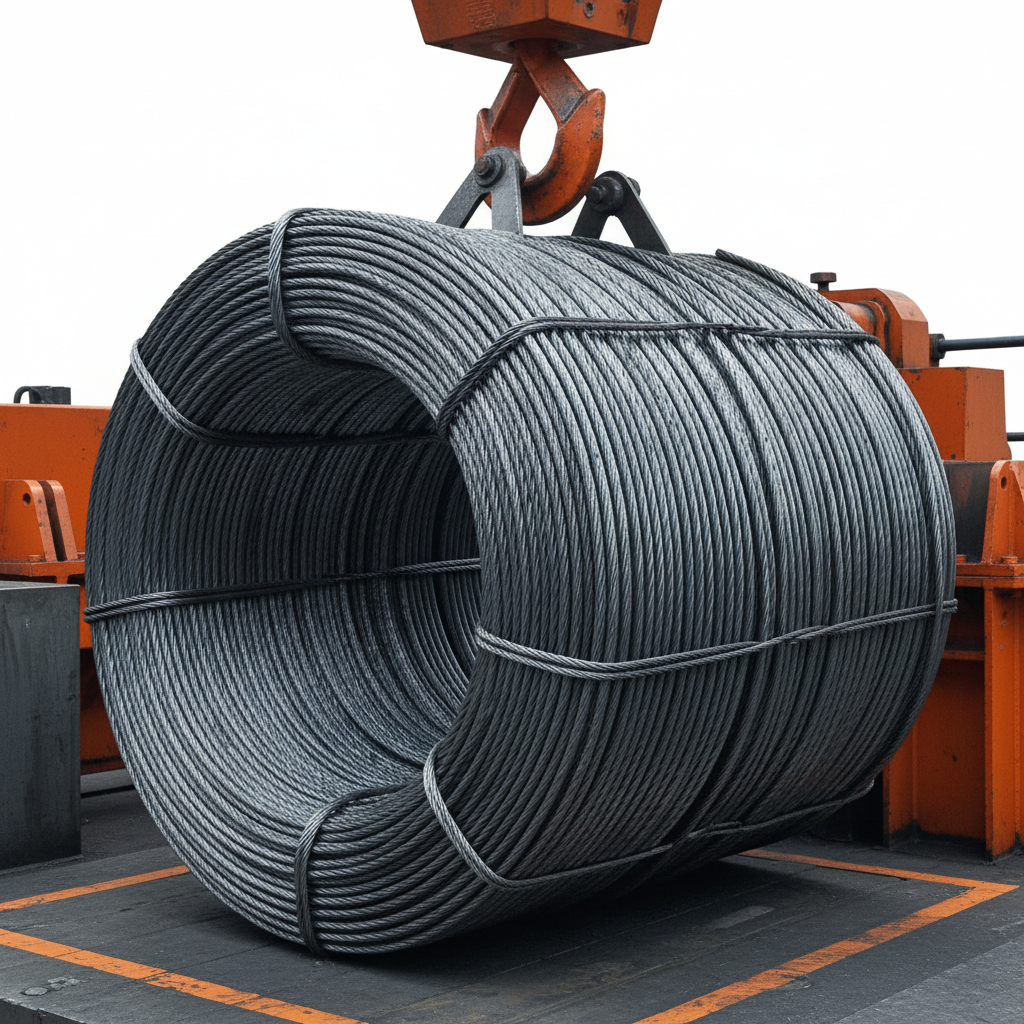
Finally, logistics capability is a hidden but critical cost factor. Because wire products are heavy and bulky, the efficiency of packaging—such as tight rolling and secure wrapping—reduces damage during transit and lowers shipping costs. A supplier with a proven global export history is better equipped to handle the complexities of international shipping.
| Application Scenario | Recommended Product | Key Requirement | Primary Material |
|---|---|---|---|
| High-Security Perimeter | 358 Security Fence | Anti-climb / Anti-cut | Galvanized Steel |
| Agricultural Fencing | Field Fence / Barbed Wire | Cost-efficiency / Durability | Galvanized / PVC Coated |
| Erosion Control | Gabion Box / Hex Mesh | Flexibility / Load Bearing | Heavy Galvanized Wire |
| Industrial Partition | Welded Mesh Panel | Rigidity / Stability | Welded Carbon Steel |
| Animal Containment | Rabbit / Chicken Cages | Specific Aperture Size | Galvanized Steel |
| Temporary Site Security | Temporary Fence | Rapid Deployment | Steel Pipe & Mesh |
Galvanized wire is coated in a layer of zinc to prevent rust through a chemical reaction. PVC coating is a plastic layer applied over the metal (often over a galvanized core). While galvanization is highly effective and cost-efficient for most outdoor uses, PVC provides an additional physical barrier against moisture and chemicals, making it superior for coastal environments or areas where aesthetic color-matching is required.
Mesh size selection depends on the size of the animal being contained or excluded. For small livestock like rabbits or chickens, a smaller aperture is necessary to prevent escapes and protect them from predators. You must provide the supplier with the specific animal type and the maximum gap allowed. A professional supplier will suggest a wire diameter that prevents the mesh from sagging or being pushed open by the animals.
The 358 Security Fence is widely considered the most effective for high-risk zones. Its name refers to the mesh dimensions (3" x 0.5" x 8 gauge), which creates a barrier that is nearly impossible to climb due to the lack of foot-holds and extremely difficult to cut with manual tools. Combining this with razor barbed wire toppers creates a comprehensive deterrent system for warehouses, factories, and government sites.
To receive an accurate quote, you should specify the material (e.g., galvanized, stainless, PVC), the wire diameter, the mesh size (aperture), the total length or width, and the required quantity. If you are ordering barbed wire, include the barb spacing and weight per roll. Mentioning the environmental conditions (e.g., seaside or high-acid area) helps the supplier recommend the correct coating thickness.
While welded mesh is very strong, it is typically too rigid for erosion control, where the structure needs to conform to the shape of the land. For these applications, hexagonal wire mesh or woven mesh used in gabion boxes is preferred. These allow the "cages" to settle naturally into the terrain while maintaining the structural integrity needed to hold heavy stones in place.
Lead times vary based on the season and the complexity of the order. Generally, production can be completed within 5 to 25 days, not including shipping time. For customized products or very large volumes, this may vary. It is recommended to coordinate with the sales department early to align production schedules with your project deadlines and shipping logistics.
The effectiveness of any steel mesh installation is not defined by the product alone, but by the alignment of the material specifications with the operational environment. From the precision of a 358 security fence to the versatility of galvanized barbed wire, the right choice reduces long-term maintenance costs and enhances site safety.
Partnering with an experienced manufacturer that controls the entire process—from raw material inspection to final packaging—ensures that the infrastructure delivered meets international standards. By focusing on technical parameters and corrosion protection, project managers can build barriers that truly stand the test of time.