
Choosing the Right Nails for Treated Pine Fence Construction and Longevity
Choosing the Right Nails for Treated Pine Fence
Building a fence is a significant investment, and choosing the right materials is crucial for its longevity and durability. When working with treated pine, selecting the appropriate nails for treated pine fence is paramount. Treated pine contains chemicals to resist rot and insect damage, but these chemicals can corrode standard nails. This article will guide you through the types of nails best suited for treated pine, factors to consider, and how to ensure a lasting and secure fence. We’ll cover everything from nail materials to sizing and application techniques, helping you make informed decisions for your project.
Understanding Treated Pine and Corrosion
Treated pine lumber is impregnated with preservatives, primarily copper-based compounds, to protect it from decay and pests. While this treatment significantly extends the life of the wood, it presents a corrosion challenge for fasteners. Standard steel nails react with the chemicals in the treated wood, leading to rust and weakening of the connection over time. This corrosion can compromise the structural integrity of your fence. Therefore, using nails specifically designed for treated lumber is essential. Choosing the wrong nail can lead to premature fence failure and costly repairs. Proper corrosion resistance ensures the fence remains strong and secure for years to come.
Key Takeaway: Using standard nails with treated pine will lead to corrosion, compromising the structural integrity of your fence. Always opt for corrosion-resistant fasteners.
The Best Nail Materials for Treated Pine
Several materials excel at resisting the corrosive effects of treated pine. Here's a breakdown of the most commonly used options:
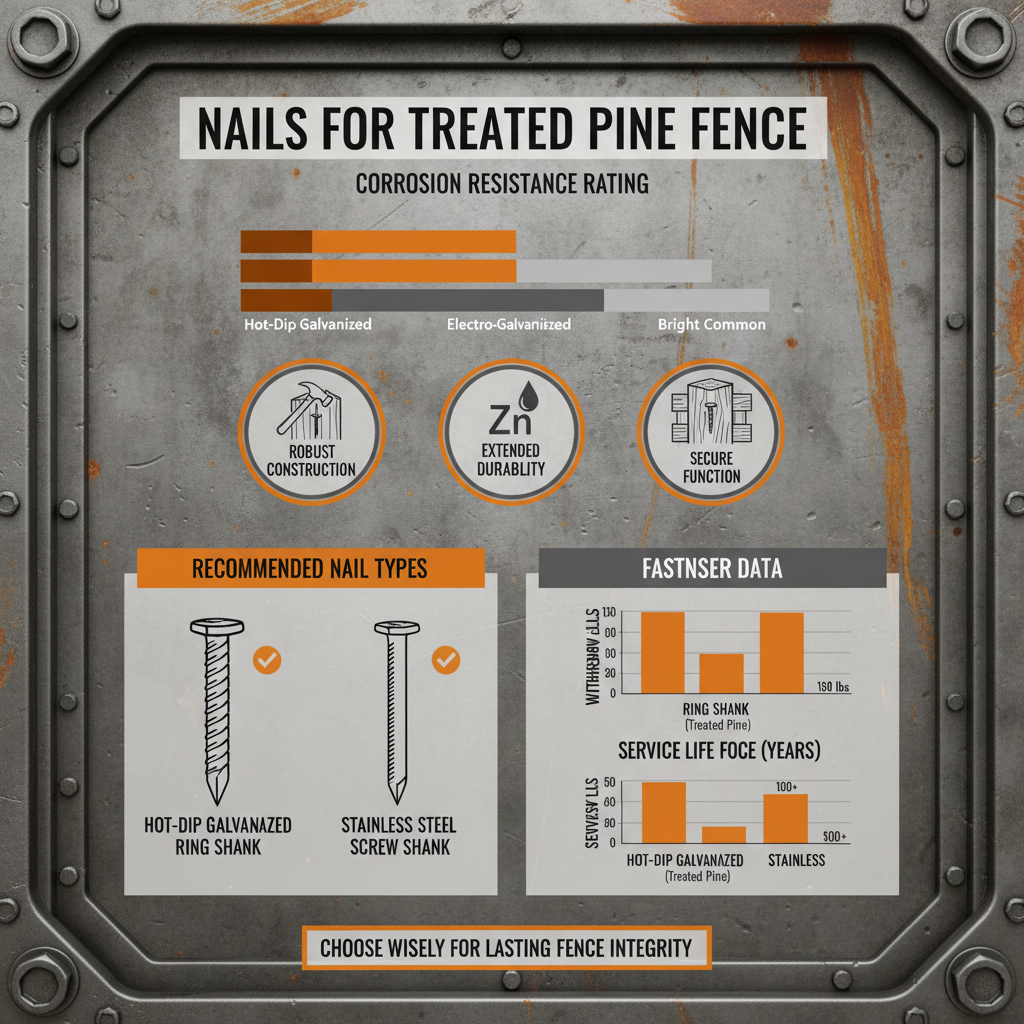
- Hot-Dipped Galvanized Nails: These nails are coated with a layer of zinc, providing excellent corrosion protection. The hot-dipped process creates a thicker, more durable coating compared to electro-galvanized nails.
- Stainless Steel Nails: Offering superior corrosion resistance, stainless steel nails are ideal for projects near saltwater or in highly corrosive environments. While more expensive, they provide long-lasting performance.
- Coated Screws (Specifically Designed for Treated Wood): Though not nails, coated screws (like those with ceramic coatings) offer exceptional holding power and corrosion resistance, making them a popular alternative.
Material Comparison:
• Hot-Dipped Galvanized: Excellent corrosion protection, cost-effective.
• Stainless Steel: Superior corrosion resistance, higher cost.
• Coated Screws: Exceptional holding power, excellent corrosion resistance.
Nail Size and Type for Fence Construction
The appropriate nail size and type depend on the thickness of the fence boards and posts. For most fence applications, 8d to 16d common nails are suitable.
- 8d Nails (2.5 inches): Best for attaching thinner fence boards (e.g., 1x4, 1x6) to rails.
- 10d Nails (3 inches): Ideal for general fence construction, attaching rails to posts, and securing thicker boards.
- 16d Nails (3.5 inches): Used for heavier-duty applications, like attaching posts to supporting structures.
Proper Nailing Techniques for Treated Pine
Even with the right nails, improper techniques can lead to splitting or weak connections.
- Pre-Drilling: When working close to the edge of the wood or with particularly hard treated pine, pre-drilling a pilot hole can prevent splitting.
- Clinching: For maximum holding power, clinch the nail slightly – bend the tip over after it has penetrated the wood.
- Avoid Overdriving: Overdriving nails can damage the wood fibers and reduce their holding capacity.
- Staggered Pattern: When attaching multiple boards, use a staggered nailing pattern to distribute the stress and prevent splitting.
Conclusion: Building a Lasting Fence
Invest in Quality Fasteners
Choosing the correct nails for treated pine fence is an investment in the longevity and safety of your property. By understanding the corrosive effects of treated wood and selecting corrosion-resistant fasteners, you can ensure a durable and structurally sound fence. Don’t compromise on quality – choose the right nails for the job and enjoy a beautiful, secure fence for years to come.
Frequently Asked Questions (FAQs)
Can I use regular galvanized nails on treated pine?
While regular galvanized nails offer some corrosion resistance, they are not recommended for treated pine. The chemicals in the treatment process will still react with the zinc coating, eventually leading to rust and weakening of the connection. Hot-dipped galvanized or stainless steel nails are the preferred choice for long-term durability. Using the wrong nail can lead to premature fence failure and necessitate costly repairs. Always prioritize corrosion resistance when working with treated lumber to ensure your fence remains structurally sound for years.
What’s the difference between hot-dipped and electro-galvanized nails?
The main difference lies in the thickness of the zinc coating. Hot-dipped galvanizing involves immersing the nail in molten zinc, creating a thicker, more durable coating. Electro-galvanizing uses an electrical current to deposit a thinner zinc layer. Hot-dipped galvanized nails offer superior corrosion resistance, making them the better choice for treated pine. Electro-galvanized nails are suitable for less corrosive environments but may not provide sufficient protection for treated lumber over the long term.
Are screws better than nails for treated pine fences?
Screws, especially those coated for treated wood, generally offer superior holding power compared to nails. They grip the wood fibers more securely and are less likely to loosen over time due to expansion and contraction. While more expensive, screws provide a more durable and long-lasting connection. The decision depends on your budget and desired level of security. Screws are particularly beneficial in areas prone to high winds or significant stress. You can explore high-quality screws specifically designed for treated pine at Ironwire Factory.
How can I prevent nails from splitting the wood when building my fence?
To minimize splitting, pre-drilling pilot holes, especially when nailing close to the edges or ends of the wood, is highly recommended. This creates a channel for the nail to pass through, reducing the pressure on the wood fibers. Also, avoid using excessively large nails, and consider using ring shank nails, as they require less force to drive and reduce the risk of splitting. Using a staggered nailing pattern also helps distribute the stress and prevent localized splitting.
-
Professional Guide to Choosing Nails for Wooden Fence PanelsNewsApr.16,2026
-
PING HONGLIN WIRE MESH CO.,LTD: African Clients Visit Factory, Deepen Cooperation to Build a Global Quality BenchmarkNewsApr.14,2026
-
Guide to Choosing the Best nails for wood trim for CarpentryNewsApr.09,2026
-
Recognized for Excellence: ANPING HONGLIN WIRE MESH Named Alibaba FY2026 TOP Transaction Merchant, Celebrating 35 Years of Manufacturing HeritageNewsApr.07,2026
-
HONGLIN WIRE MESH Showcases at WORLDBEX Philippines 2026, Earning Strong Recognition from Global Builders & DistributorsNewsApr.07,2026
-
Spanish Client Delegation Visits Our Factory for Exchange, Exploring New Cooperation Opportunities in Welded Wire ProductsNewsApr.07,2026


