
Essential Guide to Selecting the Best Nails for Pressure Treated Decking
Choosing the Right Nails for Pressure Treated Decking
Pressure treated decking offers durability and resistance to rot, insects, and fungal decay, making it a popular choice for outdoor construction. However, using the wrong nails can compromise its longevity and even void warranties. Selecting the appropriate nails for pressure treated decking is crucial for a secure and lasting build. This article will explore the key considerations when choosing nails, the different types available, and best practices for ensuring a successful decking project. We'll delve into material compatibility, corrosion resistance, and the importance of using fasteners specifically designed for pressure-treated lumber.
Understanding Pressure Treated Lumber and Corrosion
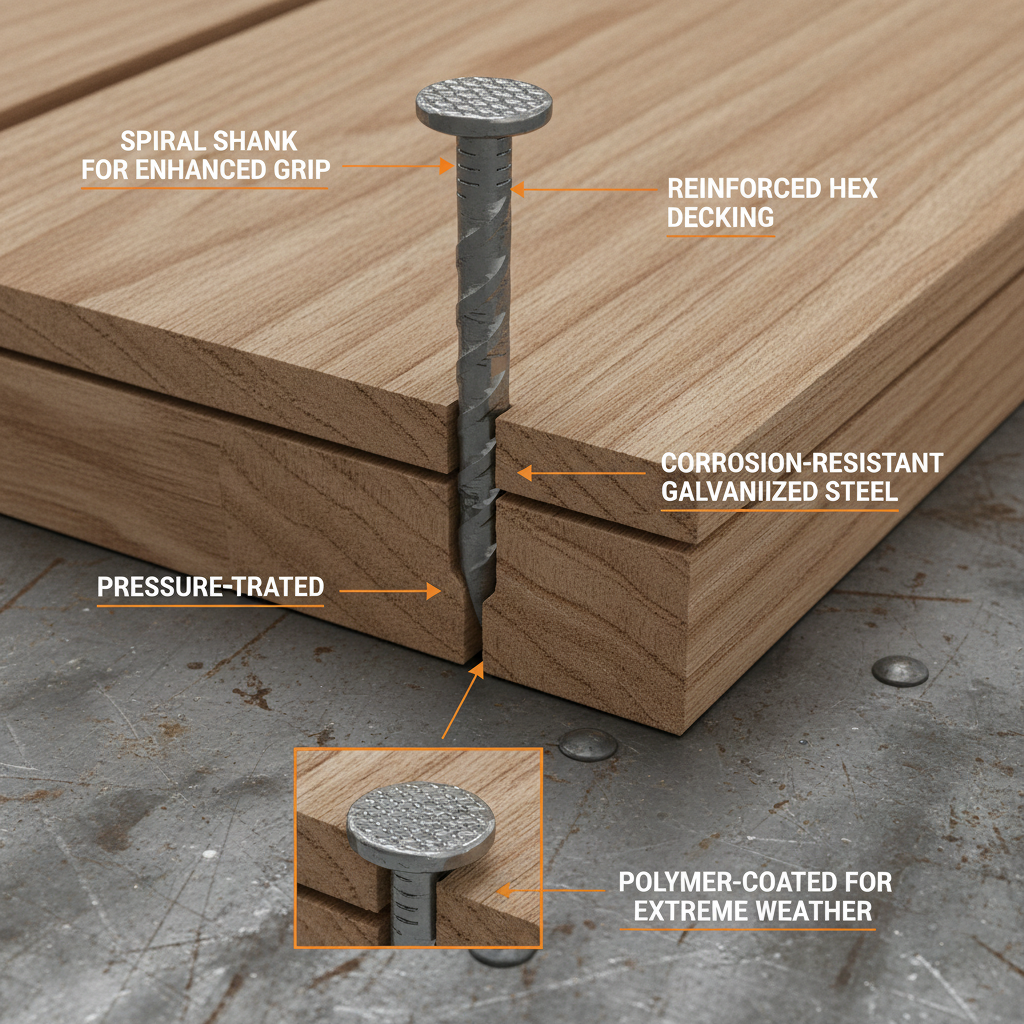
Pressure treatment involves infusing wood with chemical preservatives to protect it from decay. These preservatives, while effective, can be corrosive to standard steel nails. Over time, a chemical reaction occurs, leading to staining, weakening of the nail, and ultimately, structural failure. This is why it's paramount to use nails specifically designed to resist corrosion from these chemicals. The most common preservatives include Alkaline Copper Quaternary (ACQ), Copper Azole (CA), and Micronized Copper Azole (MCA). Different preservatives have varying levels of corrosivity, but regardless, specialized fasteners are essential for long-term deck integrity. Choosing the right nails ensures your deck remains safe and secure for years to come.
Key Takeaway: Using standard nails with pressure treated lumber will lead to corrosion and structural weakness, potentially causing deck failure.
Types of Nails for Pressure Treated Decking
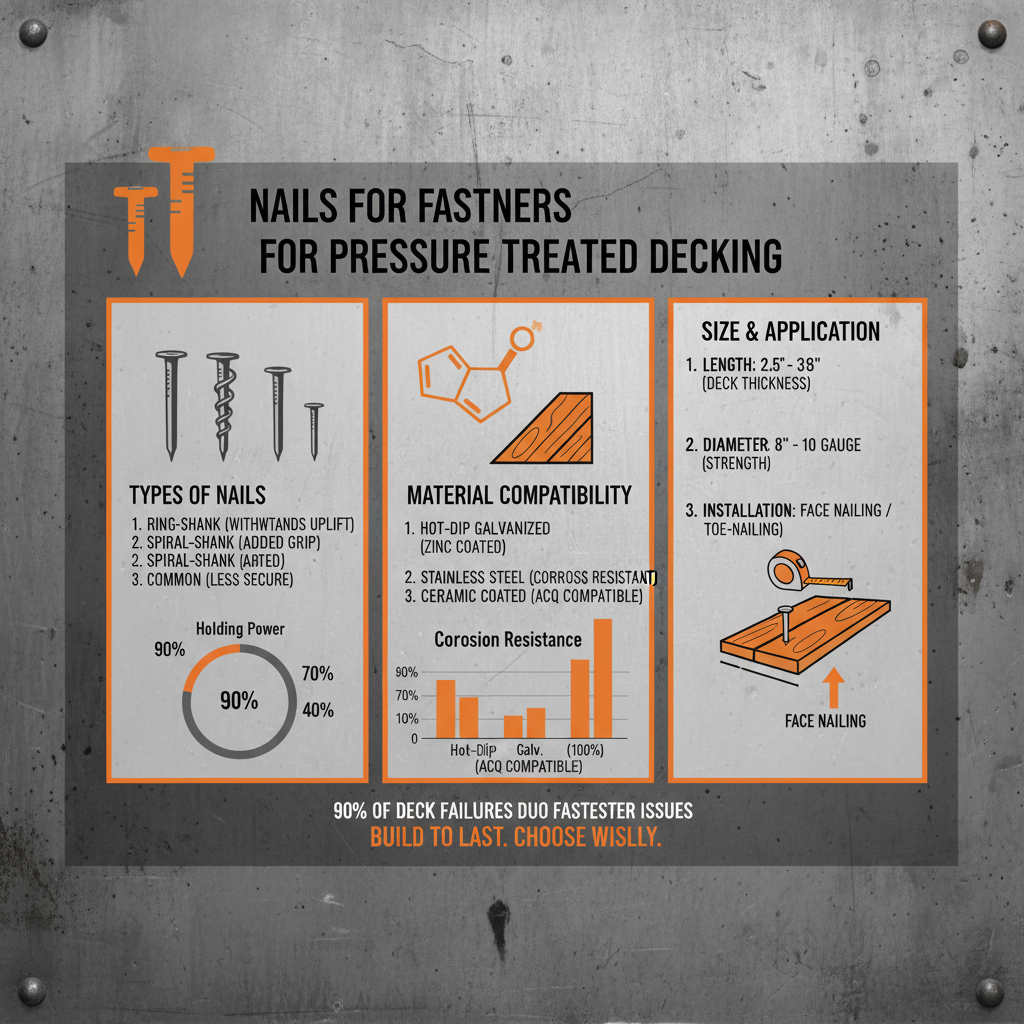
Several types of nails are suitable for pressure treated decking, each with its own advantages and disadvantages. The most common include: Hot-Dipped Galvanized Nails: These nails are coated with a layer of zinc through a hot-dipping process, providing excellent corrosion resistance. Stainless Steel Nails: Offering superior corrosion protection, stainless steel nails are ideal for coastal environments or decks exposed to harsh weather. Coated Nails: These nails feature various coatings, such as ceramic or polymer, to enhance their resistance to corrosion. However, the effectiveness of these coatings can vary. Choosing the right type depends on your budget, the environmental conditions, and the level of protection required. Ironwirefactory offers a comprehensive range of nails designed specifically for pressure treated lumber.
Nail Type Comparison:
• Hot-Dipped Galvanized: Excellent corrosion resistance, cost-effective.
• Stainless Steel: Superior corrosion resistance, ideal for harsh environments.
• Coated: Variable corrosion resistance, generally less expensive than galvanized or stainless steel.
Hot-Dipped Galvanized vs. Stainless Steel Nails: A Detailed Comparison
When choosing between hot-dipped galvanized and stainless steel nails, several factors come into play. Galvanized nails offer a good balance of corrosion resistance and affordability, making them a popular choice for most decking projects. However, in coastal areas with saltwater exposure or regions with high humidity, stainless steel nails provide superior protection against corrosion. While more expensive, their longevity and resistance to rust can justify the investment. Consider the long-term costs – replacing corroded nails is far more expensive than investing in higher-quality stainless steel initially. Here's a comparative look:
Nail Size and Type for Different Decking Applications
The appropriate nail size and type depend on the thickness of the decking boards and joists. Generally, 8d or 10d nails are suitable for most decking applications. Ring shank nails provide superior holding power compared to smooth shank nails, as the rings grip the wood fibers more effectively. For thicker decking boards, 12d or even 16d nails may be necessary. Always consult local building codes and manufacturer recommendations for specific requirements. Ironwirefactory provides a wide selection of nail sizes and types to meet any decking project need.
Best Practices for Using Nails with Pressure Treated Decking
To ensure a long-lasting and structurally sound deck, follow these best practices: Always use nails specifically designed for pressure treated lumber. Pre-drill holes, especially when working with hardwoods, to prevent splitting. Avoid overdriving nails, as this can compress the wood fibers and reduce holding power. Stagger nail placement to distribute stress evenly. Inspect nails regularly for signs of corrosion and replace as needed. By adhering to these guidelines, you can maximize the lifespan and safety of your pressure-treated decking. Remember, investing in quality nails and proper installation techniques is a small price to pay for peace of mind.
Conclusion: Protecting Your Investment with the Right Fasteners
Choosing the right nails for pressure treated decking is a critical step in ensuring a durable, safe, and long-lasting outdoor space. By understanding the unique challenges posed by pressure-treated lumber and selecting corrosion-resistant fasteners, you can protect your investment and enjoy your deck for years to come. Don't compromise on quality – choose Ironwirefactory for all your decking needs.
Frequently Asked Questions (FAQs)
Can I use regular galvanized nails on pressure treated lumber?
While regular galvanized nails offer some corrosion resistance, they are not designed to withstand the corrosive chemicals used in pressure treatment. Over time, these chemicals will react with the zinc coating, leading to rust and weakening of the nail. This can compromise the structural integrity of your deck and potentially lead to failure. It’s always best to use nails specifically labeled for pressure-treated lumber, such as hot-dipped galvanized or stainless steel, to ensure long-term durability. Using the correct fasteners is a small investment that can save you significant costs and headaches down the road.
What is the difference between ring shank and smooth shank nails?
Ring shank nails have rings along the shank (the body of the nail) that provide significantly greater holding power than smooth shank nails. These rings grip the wood fibers as the nail is driven in, creating a more secure and durable connection. Smooth shank nails are more likely to pull out over time, especially in pressure-treated lumber which can expand and contract with moisture changes. For decking applications, ring shank nails are highly recommended to ensure a long-lasting and structurally sound deck.
How often should I inspect the nails in my pressure treated deck?
Regular inspection of the nails in your pressure-treated deck is crucial for maintaining its safety and longevity. It’s recommended to inspect your deck at least twice a year – in the spring before heavy use and in the fall after the season ends. Look for signs of corrosion, such as rust or staining around the nail heads. Also, check for any nails that are loose, bent, or protruding. If you find any damaged nails, replace them immediately with the appropriate type for pressure-treated lumber. Proactive maintenance can prevent small issues from becoming major problems.
Are screws a better option than nails for pressure treated decking?
While nails are traditionally used for decking, screws are becoming increasingly popular. Screws offer superior holding power and are less likely to loosen over time, especially with the movement caused by expanding and contracting wood. However, it’s essential to use screws specifically designed for pressure-treated lumber, typically coated or stainless steel, to prevent corrosion. Screws are generally more expensive than nails and require more time and effort to install. Ultimately, the choice depends on your preference and budget, but screws generally provide a more durable and long-lasting connection.
-
Professional Guide to Choosing Nails for Wooden Fence PanelsNewsApr.16,2026
-
PING HONGLIN WIRE MESH CO.,LTD: African Clients Visit Factory, Deepen Cooperation to Build a Global Quality BenchmarkNewsApr.14,2026
-
Guide to Choosing the Best nails for wood trim for CarpentryNewsApr.09,2026
-
Recognized for Excellence: ANPING HONGLIN WIRE MESH Named Alibaba FY2026 TOP Transaction Merchant, Celebrating 35 Years of Manufacturing HeritageNewsApr.07,2026
-
HONGLIN WIRE MESH Showcases at WORLDBEX Philippines 2026, Earning Strong Recognition from Global Builders & DistributorsNewsApr.07,2026
-
Spanish Client Delegation Visits Our Factory for Exchange, Exploring New Cooperation Opportunities in Welded Wire ProductsNewsApr.07,2026


