- Afrikaans
- Albanian
- Amharic
- Arabic
- Azerbaijani
- Belarusian
- Bulgarian
- Croatian
- Czech
- Danish
- Dutch
- English
- Estonian
- Finnish
- French
- German
- Greek
- Hungarian
- Indonesian
- Italian
- Japanese
- Javanese
- Korean
- Latvian
- Lithuanian
- Macedonian
- Malay
- Maltese
- Nepali
- Norwegian
- Persian
- Polish
- Portuguese
- Romanian
- Russian
- Serbian
- Sinhala
- Slovak
- Slovenian
- Spanish
- Swahili
- Swedish
- Tagalog
- Tamil
- Thai
- Turkish
- Ukrainian
- Urdu
- Uzbek
- Vietnamese

Field Fence - High-Tensile, Galvanized, Easy Install
Practical Guide to Field Fence in 2025
If you manage livestock or protect crops, you already know fencing can make or break a season. To be honest, the right spec matters more than the logo on the roll. Over the past year I’ve seen a clear trend: buyers want higher tensile wires, heavier zinc (or Zn–Al) coatings, and faster installs—without runaway costs. That’s where Field Fence shines: it’s a rugged, engineered mesh that flexes on uneven ground yet holds animals securely. Many customers say the real test isn’t day one—it’s five winters later.
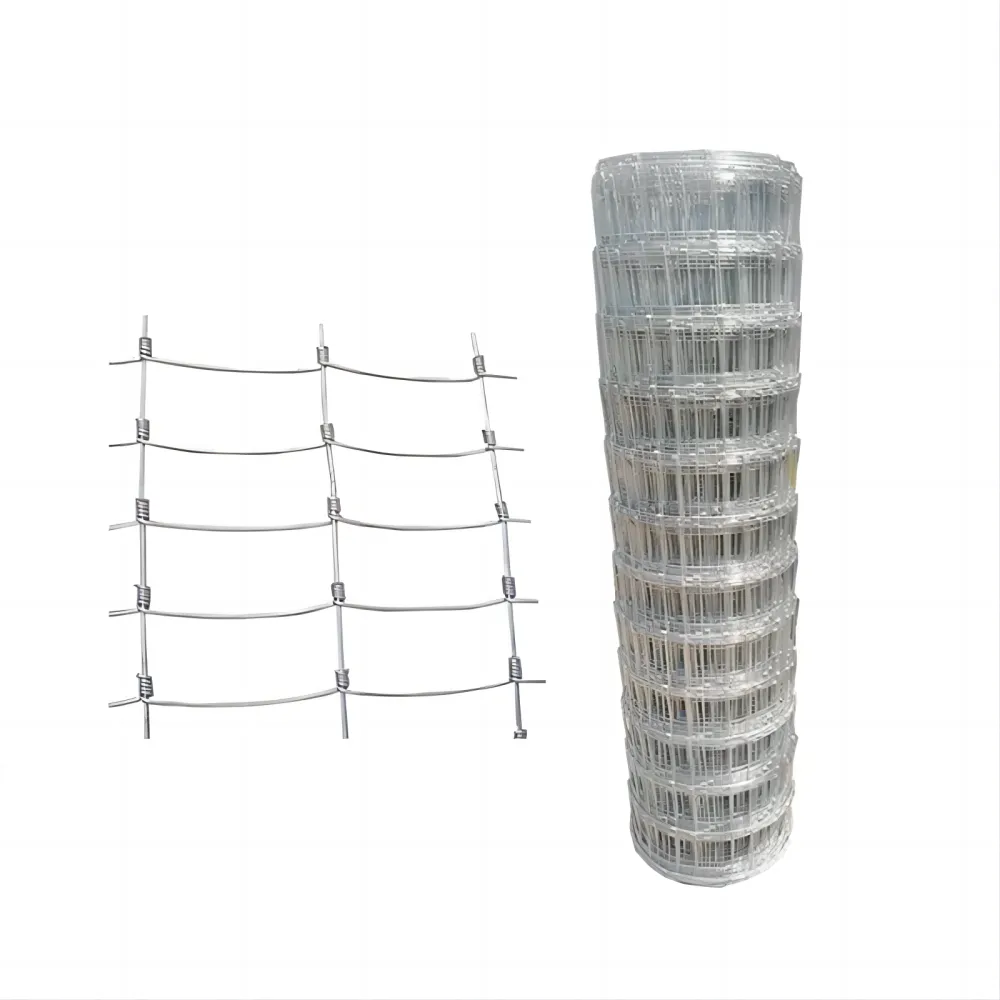
Key Specifications (real-world picks)
| Wire grades | Low-carbon (Q195/SAE 1008) or high-tensile (e.g., 72B) |
| Knot types | Hinge-joint, Fixed-knot, S-knot |
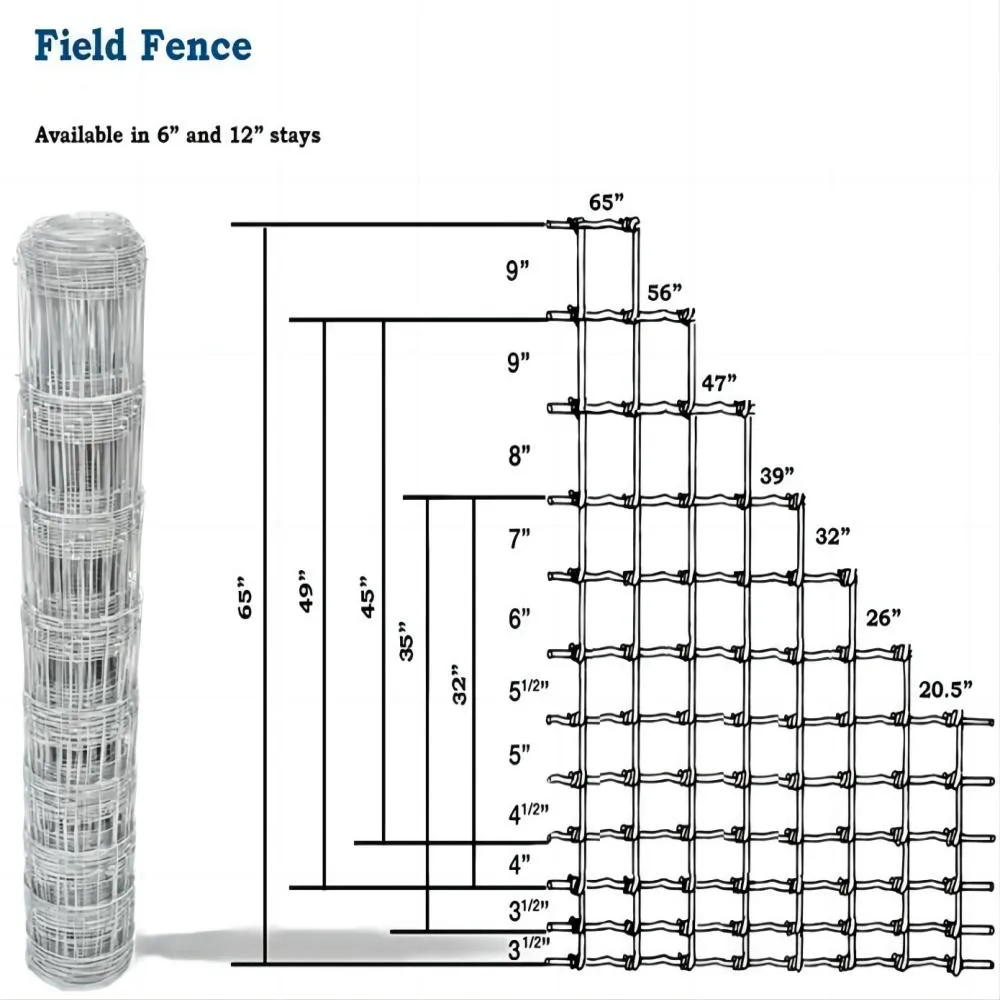
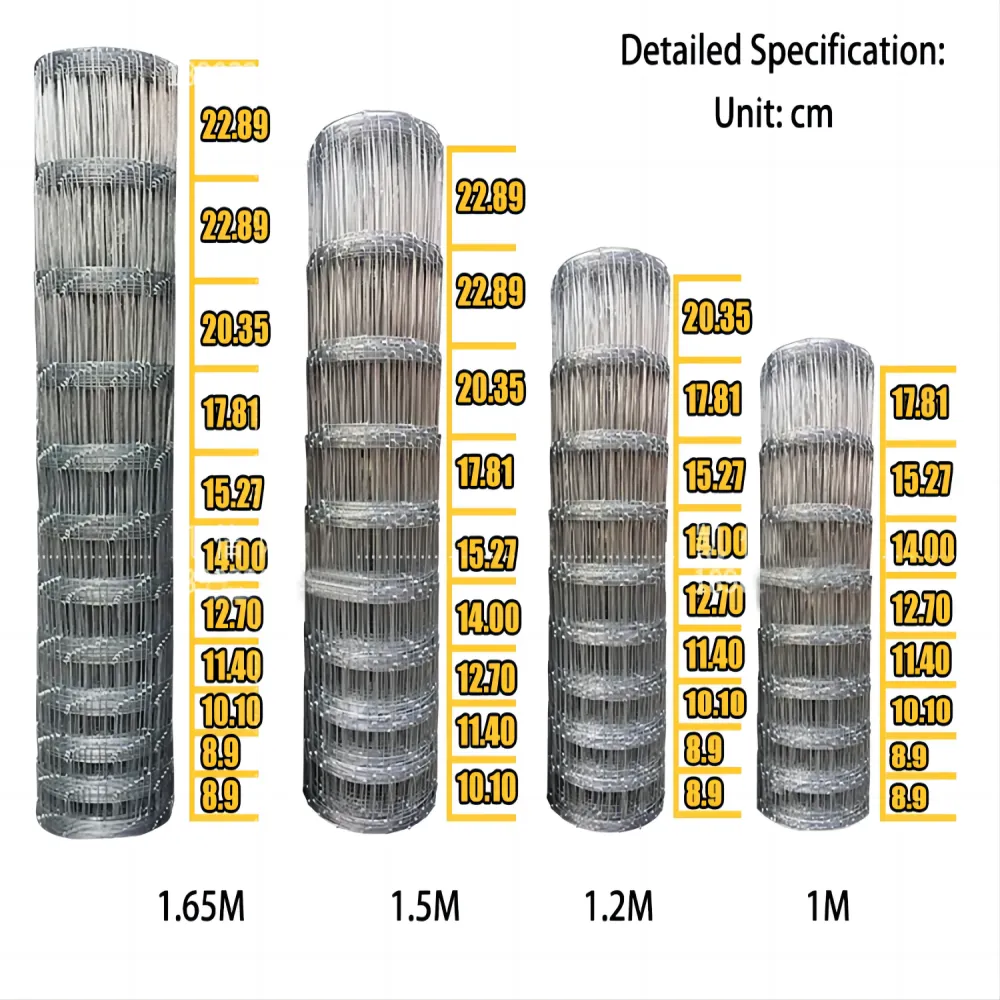
| Mesh openings | Vertical 50–200 mm; graduated horizontal, tighter at ground |
| Wire diameters | Line 1.8–3.0 mm; stay 1.8–2.5 mm (≈ depends on knot type) |
| Coatings | Hot-dip galvanized (ASTM A641 Class 3 / EN 10244-2 Class D) or Zn–Al (95/5) |
| Heights & lengths | H: 0.8–2.4 m; L: 50 m (common) or 100 m rolls |
| Tensile strength | Mild 380–550 MPa; high-tensile line wire 1050–1250 MPa |
| Service life | ≈10–25 years (environment and coating weight dependent) |
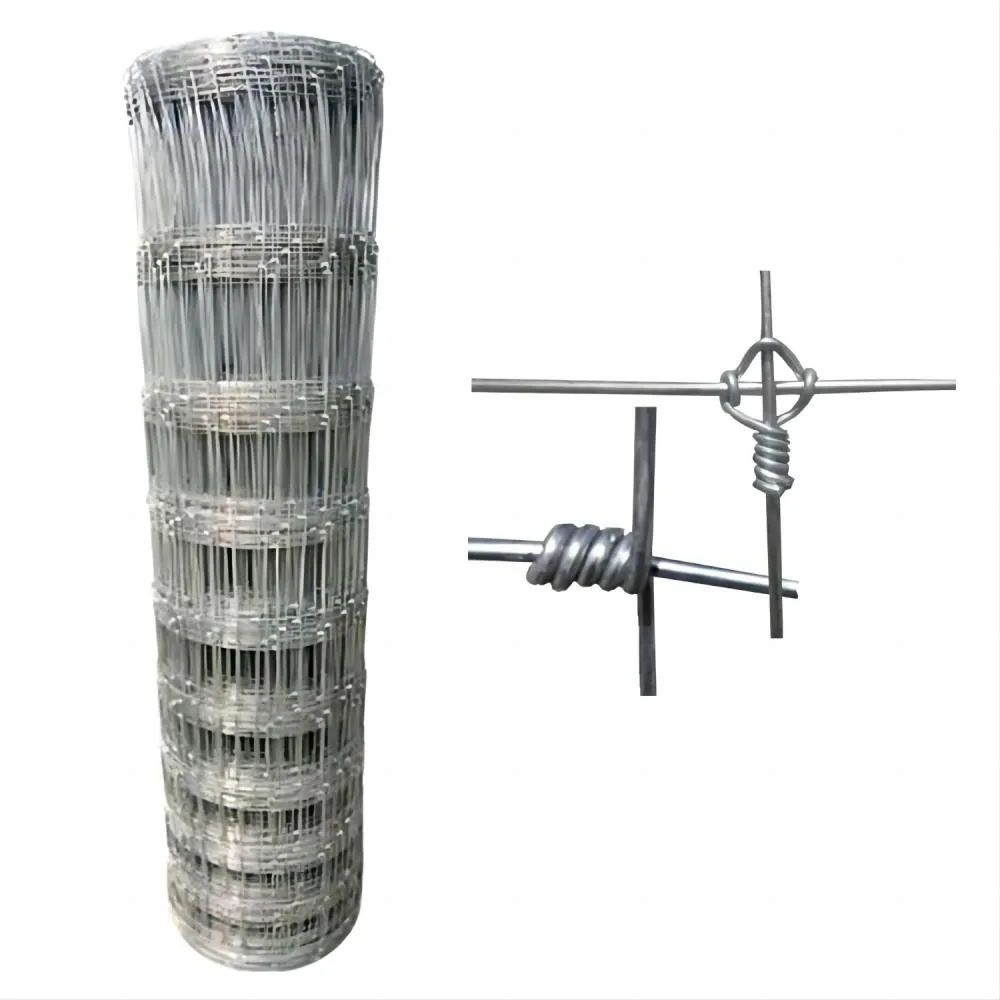
Process Flow, Testing, and Standards
Field Fence starts with wire rod, then drawing and (for mild steel) annealing. Coatings are applied by hot-dip galvanizing or Zn–Al alloy (Galfan-type). Automated knotting machines form hinge or fixed knots, the mesh is tensioned, then wound. QC typically includes zinc mass checks (e.g., ≥230–275 g/m² for heavy galvanizing), tensile tests, adhesion and bend tests, mesh dimension checks, and salt spray benchmarks. Some factories run knot pull tests around 1.0–1.5 kN to verify joint integrity. Look for references to ASTM A641/A641M, EN 10244-2, EN 10223-5, ISO 9227, and quality systems under ISO 9001:2015.
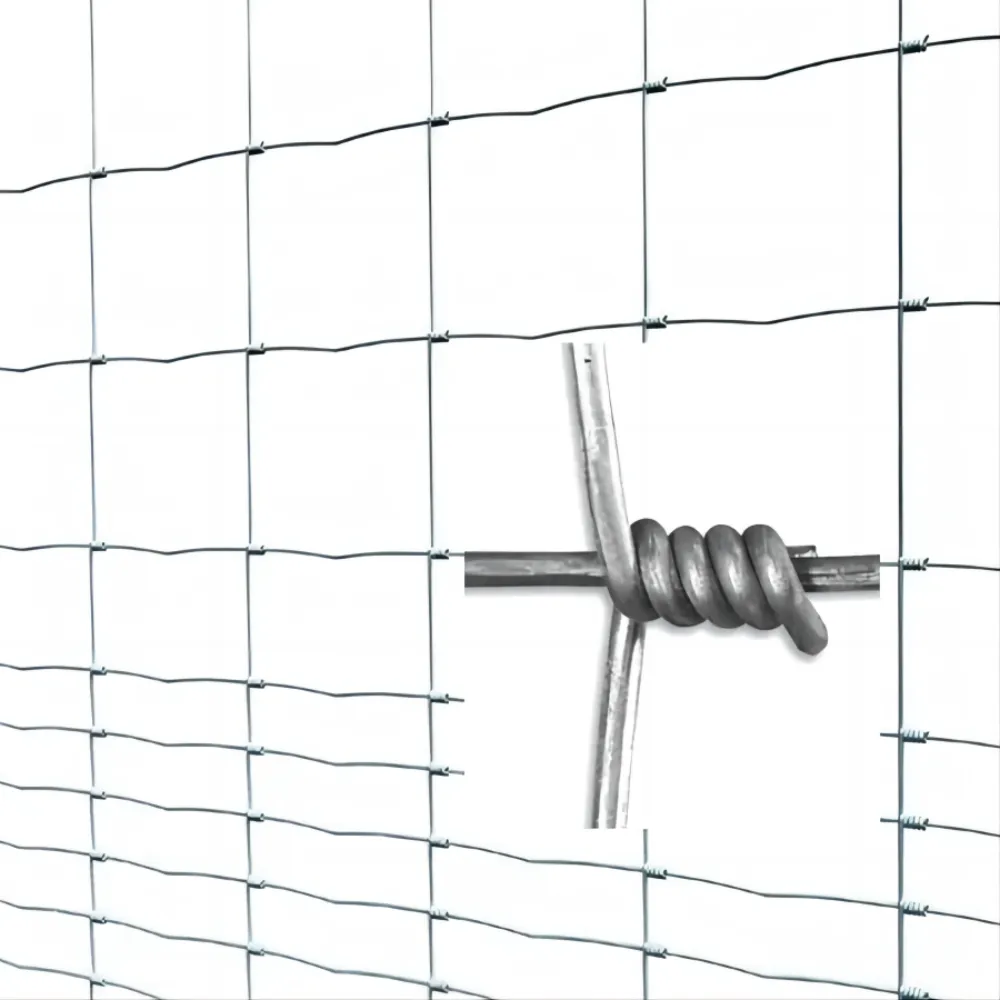
Applications and Advantages
Use Field Fence for cattle, sheep, goats, horses, and deer enclosures; crop protection (orchards, vineyards); roadside and rail corridors; and even solar-farm perimeters. Advantages include fast install on rolling terrain, animal-safe knots, and excellent strength-to-weight. Actually, fixed-knot versions resist sagging better when snow loads pile up.
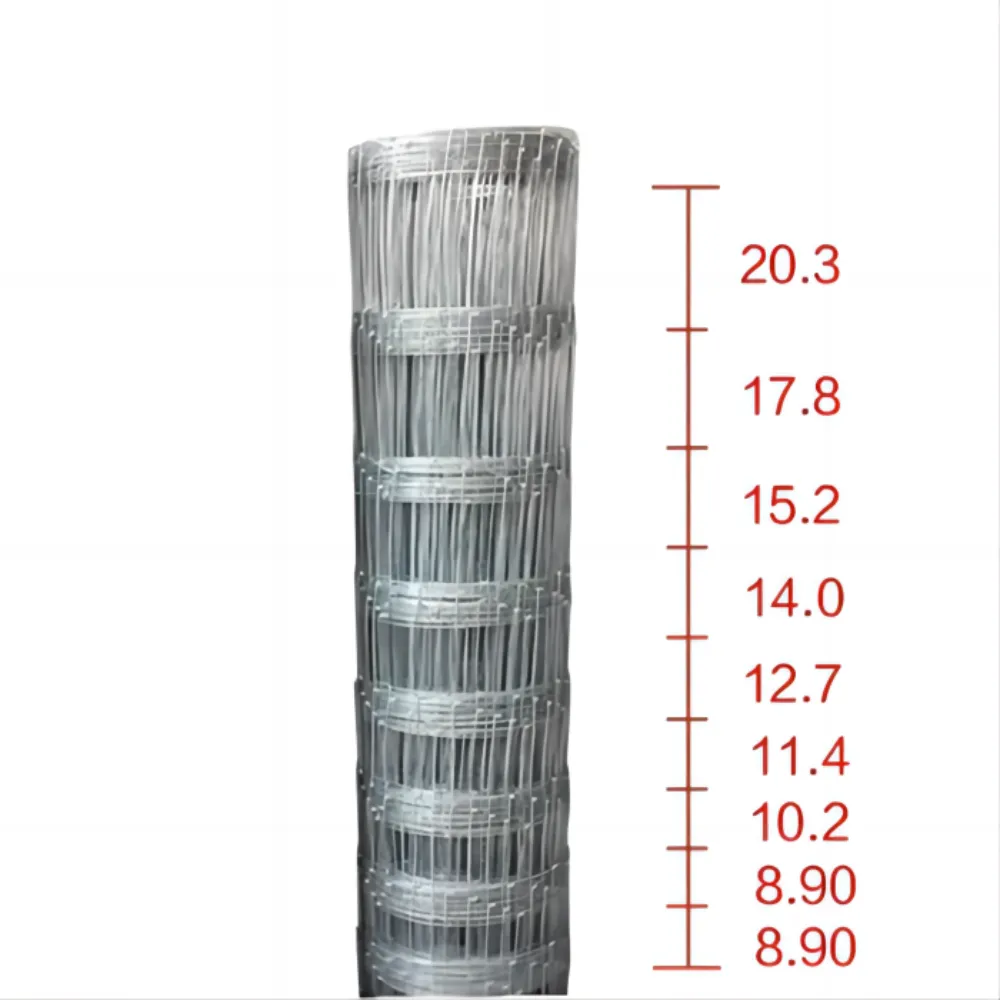
Customization
Common tweaks: height and opening gradients, end wires with barbed line on top, heavier zinc, or swapping hinge-joint to fixed-knot for tougher stock. Lead times vary, but for Field Fence in standard patterns, it’s often 2–4 weeks.
Vendor Snapshot (real-world may vary)
| Vendor | Origin | Strengths | Certs | Lead time |
|---|---|---|---|---|
| Iron Wire Factory | Heng Shui ZhengXuan Industrial Zone, AnPing, HeBei, China | Heavy zinc and Zn–Al options, fixed-knot lines, OEM sizing | ISO 9001 | ≈2–4 weeks |
| Regional farm-supply brand | US/EU | Easy retail access, standard specs on shelf | Varies | Immediate (stock) |
| Import aggregator | Mixed | Aggressive pricing, broad SKUs | Check lot-by-lot | ≈3–6 weeks |
Case Notes (from the field)
- Midwestern beef operation switched to high-tensile Field Fence with fixed knots; reports fewer breakouts during rut and a noticeable drop in maintenance trips after storms.
- Vineyard on windy slopes opted for hinge-joint Field Fence, tighter bottom spacing to deter small animals; installation crew liked the “give” on uneven terraces.
Feedback trend: “Spend on coating class and knots first; you can always add a hot wire later.” Honestly, hard to disagree.
Quick Buying Checklist
- Match knot type to stock pressure. - Ask for coating grams/m², not just “galvanized.” - Request tensile test and zinc reports. - Confirm roll height for your terrain and predators.
Authoritative references
- ASTM A641/A641M – Zinc-Coated (Galvanized) Carbon Steel Wire
- EN 10244-2:2011 – Zinc or zinc-alloy coatings on steel wire
- EN 10223-5 – Steel wire and wire products for fences (knotted mesh)
- ISO 9001:2015 – Quality management systems
- ISO 9227 – Corrosion tests in artificial atmospheres (salt spray)
- USDA NRCS Conservation Practice Standard 382 – Fence
-
Professional Guide to Choosing Nails for Wooden Fence PanelsNewsApr.16,2026
-
PING HONGLIN WIRE MESH CO.,LTD: African Clients Visit Factory, Deepen Cooperation to Build a Global Quality BenchmarkNewsApr.14,2026
-
Guide to Choosing the Best nails for wood trim for CarpentryNewsApr.09,2026
-
Recognized for Excellence: ANPING HONGLIN WIRE MESH Named Alibaba FY2026 TOP Transaction Merchant, Celebrating 35 Years of Manufacturing HeritageNewsApr.07,2026
-
HONGLIN WIRE MESH Showcases at WORLDBEX Philippines 2026, Earning Strong Recognition from Global Builders & DistributorsNewsApr.07,2026
-
Spanish Client Delegation Visits Our Factory for Exchange, Exploring New Cooperation Opportunities in Welded Wire ProductsNewsApr.07,2026


