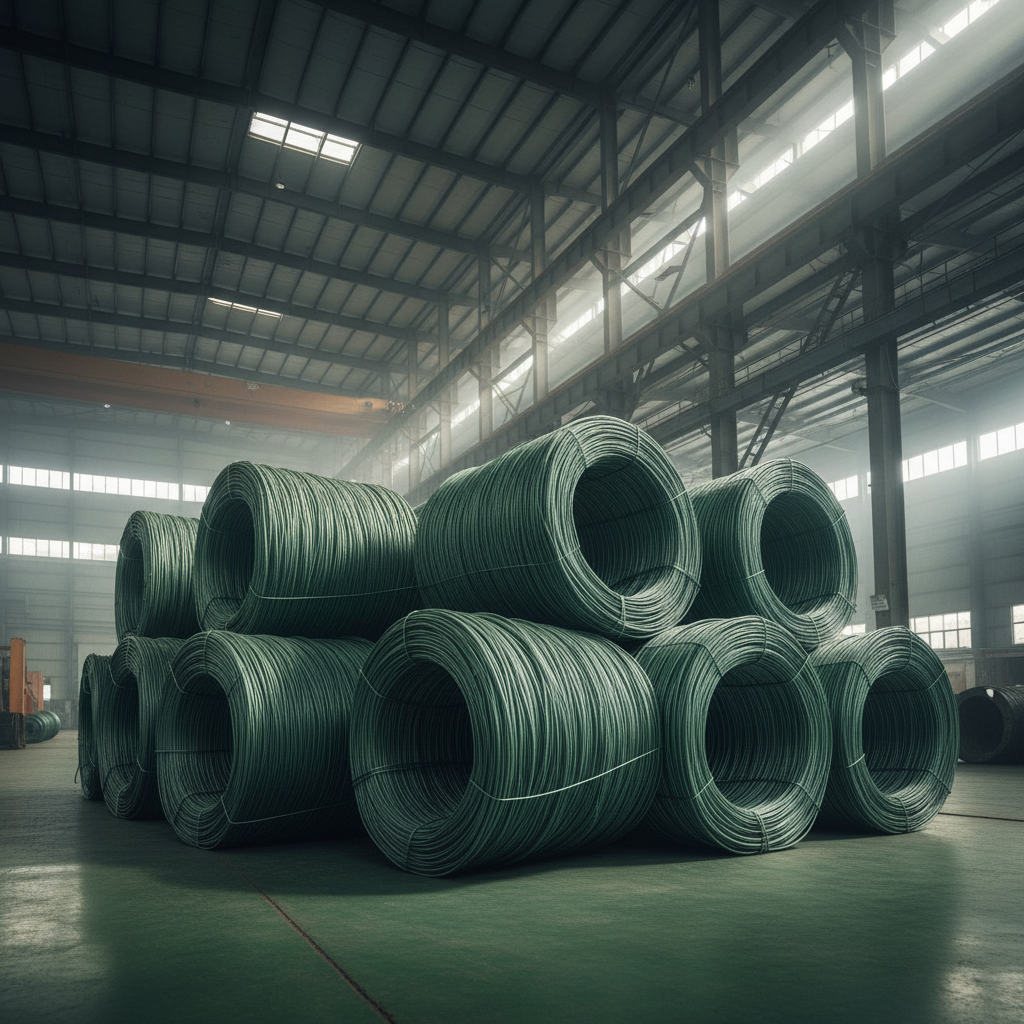
Selecting the right partner among various wire mesh manufacturers often determines the structural integrity and longevity of an entire infrastructure project. Whether for high-security perimeter fencing or specialized industrial filtration, the technical variance between standard production and precision engineering is substantial.
Industrial procurement now demands more than just a product list; it requires a deep understanding of material science, coating durability, and compliance with international safety standards. The challenge for many buyers lies in balancing cost-efficiency with the rigorous demands of corrosion resistance and mechanical strength.
This guide explores the critical benchmarks for evaluating suppliers, the technical nuances of different mesh configurations, and how to optimize the selection process for specific commercial and industrial applications.

Analyzing the Core Competencies of Industrial Mesh Suppliers

The ability of wire mesh manufacturers to deliver consistent quality depends largely on their integrated production capabilities and quality control systems. A sophisticated manufacturer does not simply weave wire; they manage a complex chain of material sourcing, tensile testing, and surface treatment chemistry.
Expertise in this sector is evidenced by the variety of production lines available—from automated welded mesh panels to precision-crimped architectures. For instance, maintaining a 50,000m² facility with multiple automated lines allows for the rapid turnaround required by large-scale construction projects without sacrificing dimensional accuracy.
Furthermore, the capacity for OEM and ODM services distinguishes a commodity supplier from a strategic partner. The ability to customize aperture size, wire gauge, and surface finishes—such as hot-dip galvanizing or PVC coating—is essential for meeting specific project requirements in varying climatic conditions.
Technical Determinants of Wire Mesh Performance and Durability
Mechanical performance in wire mesh is a result of the interplay between raw material purity and the fabrication process. Carbon steel remains the industry standard for strength, but its vulnerability to oxidation necessitates advanced surface treatments.
Hot-dip galvanizing provides a superior barrier compared to pre-galvanized options by creating a thicker, more resilient zinc layer that protects the steel core even after cutting or drilling. For environments with extreme salinity or chemical exposure, PVC coating offers an additional layer of impermeable protection.
Testing protocols, including the use of spectrometers and tensile testers, ensure that the wire meets ASTM or EN standards. These checks verify that the mesh will not deform under predicted loads and that the coating thickness is uniform across the entire surface area.
Strategic Application Mapping for Different Mesh Configurations
Selecting the appropriate mesh type requires a precise understanding of the operational environment. High-security needs, such as those for prisons or government facilities, typically mandate 358 security fencing—designed specifically to be anti-climb and anti-cut.
In agricultural contexts, the focus shifts toward animal containment and crop protection. Hexagonal wire mesh and specialized animal cages (for rabbits, chickens, or dogs) prioritize a balance between cost, flexibility, and sufficient strength to prevent predator intrusion while remaining easy to install over uneven terrain.
Industrial and civil engineering applications often utilize Gabion boxes or steel grating. These products are engineered for erosion control and structural support, where the mesh must withstand significant internal pressure from stone fill while resisting environmental degradation over decades of service.
Quantifying Material Efficiency and Corrosion Resistance Benchmarks
When comparing different surface treatments, the primary metric is the projected service life relative to the environmental corrosivity category. Black annealed wire serves economical purposes but requires frequent maintenance in outdoor settings.
The following data illustrates the performance gap between standard untreated steel and professionally treated solutions across key industrial metrics, highlighting the impact of advanced galvanization and coating technologies.
wire mesh manufacturers Performance Metrics
As indicated, hot-dip galvanized and PVC coated options significantly outperform black steel in terms of rust resistance and structural longevity. While the initial investment is higher, the total cost of ownership is reduced due to the elimination of frequent replacement and painting cycles.
Procurement Frameworks for High-Volume Wire Mesh Orders
Managing a large-scale procurement process involves more than comparing unit prices. Buyers must evaluate the manufacturer's quality management system, specifically looking for ISO 9001 certifications and CE compliance to ensure safety and standardization.
A critical step is the request for Mill Test Certificates (MTC). These documents provide verifiable data on the chemical composition and mechanical properties of the steel used, ensuring that the product will perform as specified in the engineering blueprints.
Additionally, logistics and packaging play a vital role in maintaining product quality. Proper bundling and anti-corrosive packaging prevent transit damage and surface scratching, which could otherwise create weak points for rust to initiate.
Emerging Trends in Metal Mesh Manufacturing and Automation
The industry is currently shifting toward higher degrees of automation to reduce human error and increase production speed. Robotic welding and automated cutting systems allow for tighter tolerances in welded wire mesh and more consistent aperture sizes.
There is also a growing demand for sustainable materials and processes. This includes the adoption of REACH-compliant chemical treatments and the optimization of zinc usage in galvanizing lines to reduce environmental impact without compromising protection.
Furthermore, the integration of customized digital designs allows manufacturers to produce complex 3D mesh structures that were previously impossible. This trend is particularly visible in architectural applications where aesthetic value must be combined with structural functionality.
Decision Matrix for Selecting Specialized Mesh Solutions
To simplify the selection process, procurement officers should map their specific environmental constraints against the technical capabilities of the product range.
The table below provides a comparative analysis of common mesh solutions based on their intended use case, primary material treatment, and the critical performance factor to monitor during inspection.
| Product Category | Primary Environment | Recommended Treatment | Key Quality Metric |
|---|---|---|---|
| Security Fencing | High-Risk Perimeters | Hot-Dip Galvanized | Weld Strength/Anti-Cut |
| Gabion Systems | Riverbanks/Slopes | Heavy Galvanized | Tensile Resistance |
| Agricultural Cages | Farm/Outdoor | PVC Coated/Galvanized | Aperture Consistency |
| Industrial Grating | Factories/Walkways | Pre-Galvanized/Painted | Load Bearing Capacity |
| Welded Mesh Panels | General Partitioning | Electro-Galvanized | Dimensional Tolerance |
| Specialty Filter Mesh | Chemical Processing | Stainless Steel | Pore Size Precision |
By utilizing this matrix, buyers can avoid the common mistake of over-specifying for simple tasks or under-specifying for critical security installations, ensuring an optimal balance between cost and performance.
Frequently Asked Questions
Conclusion
The effectiveness of any wire mesh installation depends on the precise alignment of material properties with environmental demands. From the rigorous security of 358 fencing to the structural utility of Gabion boxes, the role of the manufacturer extends beyond production to technical consultancy and quality assurance.
Professionals seeking to optimize their supply chain and ensure project longevity can review the relevant product specifications and company capabilities available through www.ironwirefactorys.com to find a solution tailored to their specific industrial requirements.