- Afrikaans
- Albanian
- Amharic
- Arabic
- Azerbaijani
- Belarusian
- Bulgarian
- Croatian
- Czech
- Danish
- Dutch
- English
- Estonian
- Finnish
- French
- German
- Greek
- Hungarian
- Indonesian
- Italian
- Japanese
- Javanese
- Korean
- Latvian
- Lithuanian
- Macedonian
- Malay
- Maltese
- Nepali
- Norwegian
- Persian
- Polish
- Portuguese
- Romanian
- Russian
- Serbian
- Sinhala
- Slovak
- Slovenian
- Spanish
- Swahili
- Swedish
- Tagalog
- Tamil
- Thai
- Turkish
- Ukrainian
- Urdu
- Uzbek
- Vietnamese

Iron Wire: A Strong and Flexible Link between Industry and Life
In every corner of industry and daily life, Iron Wire silently plays an indispensable role with a seemingly ordinary posture. This filamentous product made of iron element, with its diverse forms and properties, has become an important link between industrial production and daily needs, demonstrating unique value in many fields.
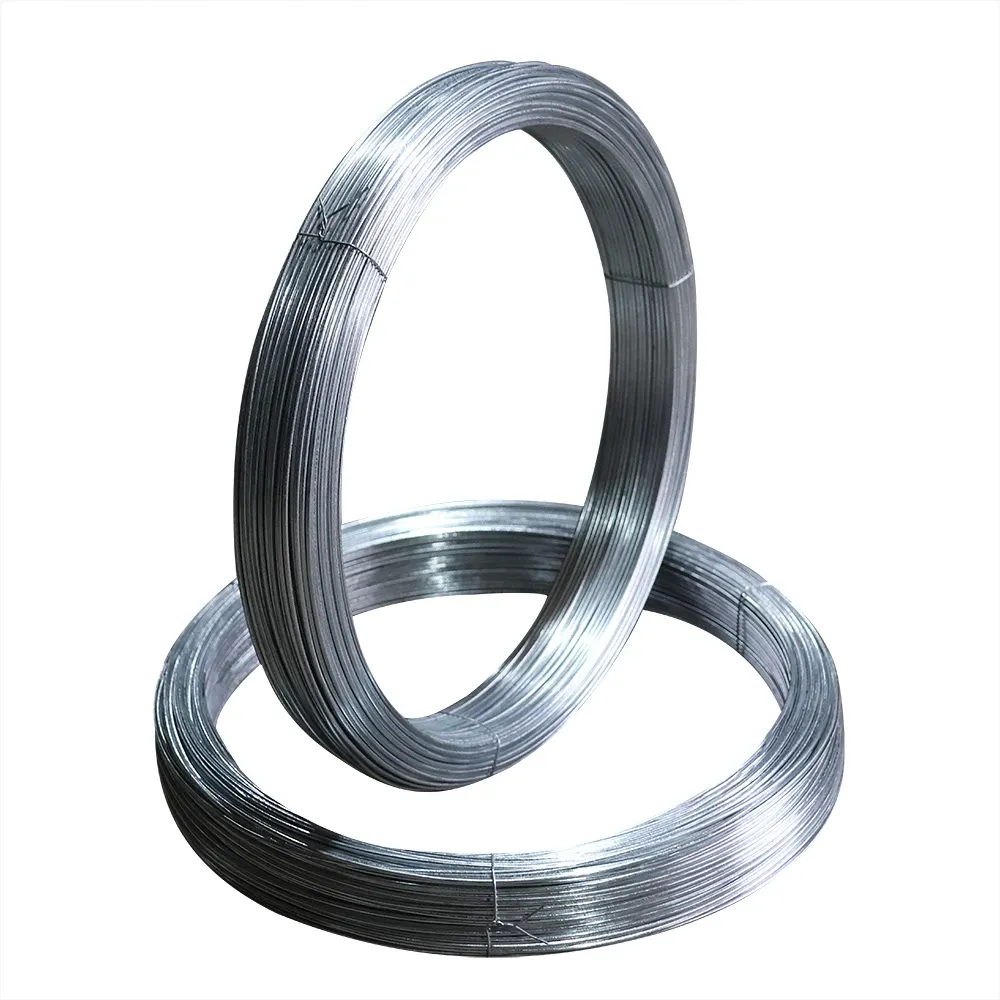
The construction and material of Iron Wire determine its fundamental performance
Iron wire for fencing is mainly made of iron or iron alloys, and elements such as carbon, manganese, and silicon are added to optimize performance according to different needs. During the production process, steel is gradually drawn fine through wire drawing technology to form Iron Wire of different diameter specifications. Surface treatment is also a key step, and processes such as galvanizing, copper plating, and plastic coating can not only enhance the corrosion resistance of Iron Wire, but also expand its application scenarios. For example, hot-dip galvanized Iron Wire significantly improves its corrosion resistance by forming a dense zinc layer on the surface, making it suitable for long-term outdoor use.
The performance advantage of Iron Wire makes it stand out in many scenarios
Firstly, it has high strength and good toughness. Iron wires as thin as 0.1 millimeters can still withstand a certain amount of tension, while coarse soft iron wires can be used for heavy-duty operations such as lifting and towing; Secondly, it has strong plasticity and can be easily bent into various shapes, meeting diverse needs such as binding and styling; Thirdly, the cost is low. Compared to copper wire, stainless steel wire, etc., Iron Wire is affordable and suitable for large-scale use. In addition, different processing techniques endow Iron Wire with special properties, such as soft and easy to operate Iron Wire after annealing treatment, and high hardness and strong wear resistance of Iron Wire after cold drawing treatment.
Iron Wire has a wide range of applications, spanning both industrial and daily life
In industry, binding iron wires are used to bind steel bars and fix templates during construction; In the field of mechanical manufacturing, Iron Wire is used for temporary fixation and assembly of components; In agricultural production, Iron Wire is a commonly used material for building greenhouses and fence farming. In daily life, Iron Wire can be used for home repairs, handmade crafts, and even in artistic creation, artists use the plasticity of Iron Wire to create exquisite sculptures. From large-scale projects to subtle details, Iron Wire plays an irreplaceable role.
With the development of technology, the production and application technology of Iron Wire continues to innovate
In the production process, automated wire drawing equipment has improved production efficiency and accuracy, and new surface treatment technologies have made the rust prevention effect more durable; At the application level, by combining new material technology, Iron Wire is compounded with polymer materials to develop new products that combine high strength and insulation properties. At the same time, the integration of environmental protection concepts has prompted Iron Wire production to adopt cleaner processes and reduce pollution emissions during the production process.
Although coated iron wire may seem ordinary, it has become an important material that cannot be ignored in industrial production and daily life due to its unique construction material, excellent performance advantages, wide application range, and continuous technological innovation. From traditional applications to innovative development, Iron Wire has always connected the needs of different fields with a combination of rigidity and flexibility. In the future, with the advancement of technology, Iron Wire will continue to expand its application boundaries, play its value in more emerging fields, and continue to write the "tough and soft legend" of Iron Wire.
Iron Wire FAQs
What is the main purpose of Iron Wire?
Iron Wire is widely used in construction bundling, horticultural fixation, handicraft production, hardware processing, and daily home maintenance. It has high strength and low cost, suitable for temporary or permanent fixed needs.
Is Iron Wire prone to rusting? How to prevent rust?
Iron wire is susceptible to moisture oxidation and rusting. Rust prevention methods include galvanizing (galvanized iron wire), applying rust proof paint, maintaining a dry environment, or using stainless steel material instead.
What is the difference between Iron Wire and Steel Wire?
Iron Wire is made of pure iron or low-carbon steel, with low hardness and easy bending; Steel wire is mostly made of high carbon steel or stainless steel, with high strength and strong corrosion resistance, suitable for load-bearing scenarios.
How to represent the specifications of Iron Wire?
Usually distinguished by diameter (in millimeters) or wire size (such as SWG, AWG standards), such as 1.6mm Iron Wire. The thicker the wire number, the smaller the value, and the greater the load-bearing capacity.
What should I pay attention to when using Iron Wire for home DIY?
Avoid bending with bare hands (to prevent scratches), and use wire pliers to cut; If used outdoors, it is recommended to choose galvanized products for rust prevention; The load-bearing limit of heavy object suspension needs to be confirmed.
-
Professional Guide to Choosing Nails for Wooden Fence PanelsNewsApr.16,2026
-
PING HONGLIN WIRE MESH CO.,LTD: African Clients Visit Factory, Deepen Cooperation to Build a Global Quality BenchmarkNewsApr.14,2026
-
Guide to Choosing the Best nails for wood trim for CarpentryNewsApr.09,2026
-
Recognized for Excellence: ANPING HONGLIN WIRE MESH Named Alibaba FY2026 TOP Transaction Merchant, Celebrating 35 Years of Manufacturing HeritageNewsApr.07,2026
-
HONGLIN WIRE MESH Showcases at WORLDBEX Philippines 2026, Earning Strong Recognition from Global Builders & DistributorsNewsApr.07,2026
-
Spanish Client Delegation Visits Our Factory for Exchange, Exploring New Cooperation Opportunities in Welded Wire ProductsNewsApr.07,2026


