- Afrikaans
- Albanian
- Amharic
- Arabic
- Azerbaijani
- Belarusian
- Bulgarian
- Croatian
- Czech
- Danish
- Dutch
- English
- Estonian
- Finnish
- French
- German
- Greek
- Hungarian
- Indonesian
- Italian
- Japanese
- Javanese
- Korean
- Latvian
- Lithuanian
- Macedonian
- Malay
- Maltese
- Nepali
- Norwegian
- Persian
- Polish
- Portuguese
- Romanian
- Russian
- Serbian
- Sinhala
- Slovak
- Slovenian
- Spanish
- Swahili
- Swedish
- Tagalog
- Tamil
- Thai
- Turkish
- Ukrainian
- Urdu
- Uzbek
- Vietnamese

Stainless Steel Wire 304/316 - Rustproof, Cut-to-Size
Stainless Steel Wire is a key solution in the manufacturing industry, specifically within Black metal smelting and rolling processing industry and Manufacturing of steel wire and its products. This article explores how Anping Honglin Wire Mesh Co., Ltd supports professionals with durable, high-performance products, and explains why this product is an ideal choice for businesses in these sectors.
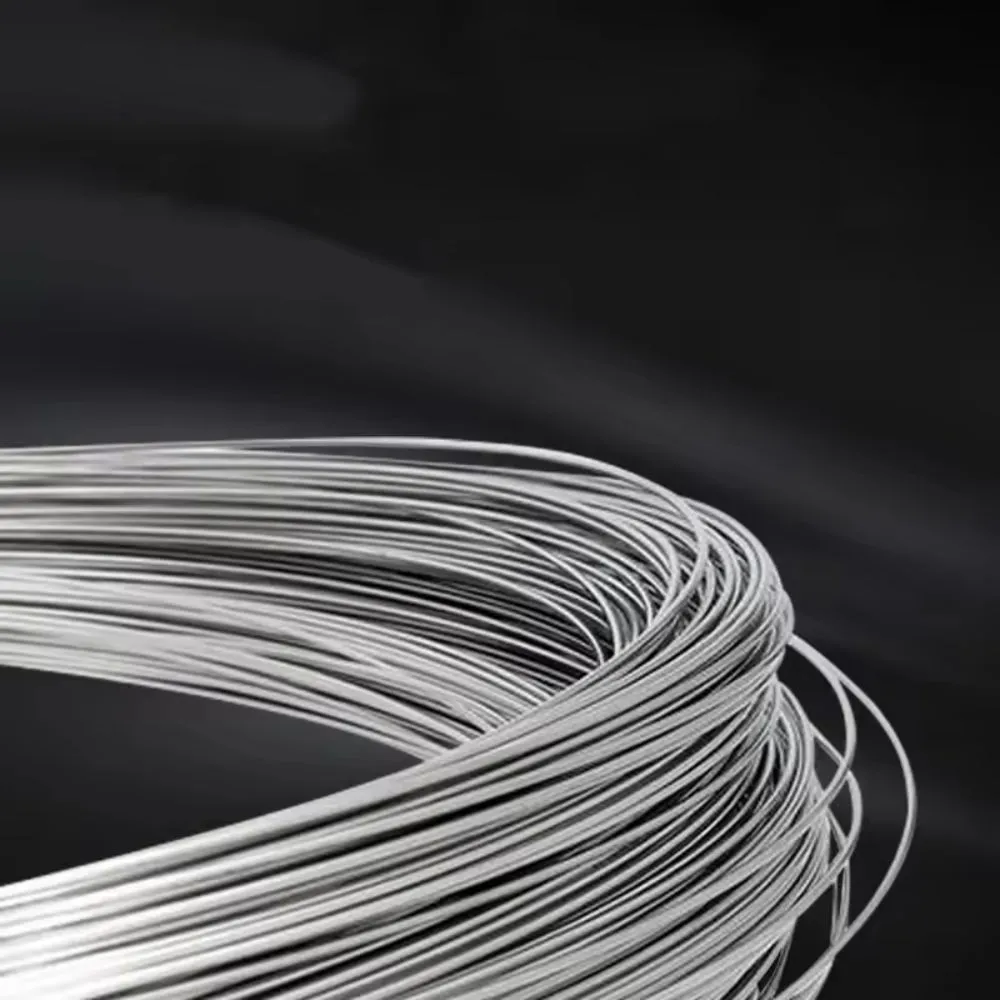
Table of Contents
- Stainless Steel Wire Overview
- Benefits & Use Cases of Stainless Steel Wire in Manufacturing of steel wire and its products
- Cost, Maintenance & User Experience
- Sustainability & Market Trends in manufacturing
- Conclusion on Stainless Steel Wire from Anping Honglin Wire Mesh Co., Ltd
Stainless Steel Wire Overview
Stainless steel wire is produced by drawing stainless steel rod through precision dies to achieve exact diameters, mechanical properties, and surface finish. For B2B manufacturers in the Black metal smelting and rolling processing industry, it serves as a critical feedstock for downstream products—including woven/knitted meshes, springs, fasteners, welding wire, forming wire, and demister pads. Typical grades include 304/304L for general corrosion resistance, 316/316L for chloride-rich environments, 321 for improved high-temperature performance, and 430 for ferritic, cost-competitive applications. Common diameters range from ultra-fine (0.02–0.20 mm) to heavy gauges (up to 6.0–8.0 mm), supplied in soft annealed, 1/4 hard to spring-temper conditions, and finishes such as bright, matte, pickled, or soap-coated for drawing.
- Relevance: A stable, high-purity Stainless Steel Wire supply ensures consistent performance in filtration, reinforcement, and forming operations across the manufacturing ecosystem.
- Technical insight: Tensile strength can span 650–2100 MPa depending on grade and temper; dimensional tolerances can be held to ±0.01–0.02 mm for precision processes; typical standards include ASTM A580/A313 and EN equivalents.
- Manufacturing partner: Anping Honglin Wire Mesh Co., Ltd provides tight cast/helix control, uniform spooling (DIN 125–300), and reliable lot traceability to support quality-driven production lines.
Benefits & Use Cases of Stainless Steel Wire in Manufacturing of steel wire and its products
Across steel wire manufacturing and downstream conversion, stainless steel wire underpins productivity, safety, and lifetime value. In wire mesh weaving and knitting, stable diameter and clean surfaces minimize loom stoppages and reduce tooling wear. In spring and forming applications, consistent temper ensures repeatable load/deflection curves and superior fatigue life. For fasteners, welding products, demisters, conveyor belting, and cable armoring, grade choice aligns with chemical exposure, temperature, and mechanical demands—helping operators balance cost and performance.
- Applications: Woven/knitted wire mesh for filtration, demister pads, spring wire for machinery, wire for tying and forming, welding filler, reinforced gaskets, and heat-resistant fixtures for furnaces.
- Advantages: High corrosion resistance (especially 316/316L), excellent cleanability, non-reactivity for food/pharma, good high-temperature stability (e.g., 321), and recyclability—plus tight tolerances for automated equipment.
- Supplier capability: Anping Honglin Wire Mesh Co., Ltd leverages controlled drawing, repeatable annealing, and rigorous surface preparation to deliver consistent, production-ready wire with low defect rates and reliable coil-to-coil uniformity.
Cost, Maintenance & User Experience
Total cost of ownership for stainless steel wire extends beyond the per-kg price. Longevity in corrosive or high-temperature environments reduces replacement frequency and changeover downtime, improving OEE and labor utilization. Predictable mechanical properties lower scrap, while clean surfaces reduce die wear and maintenance. Pricing is influenced by grade (nickel/moly content), diameter, temper, surface finish, coil weight, and packaging. With optimized supply planning, many buyers report lower lifetime costs compared to carbon steel alternatives in critical environments.
- Durability & ROI: Fewer unplanned stops and longer service life can deliver double-digit reductions in maintenance-related downtime over a 12–18 month horizon, depending on application conditions.
- User feedback: Customers in smelting-adjacent and mesh-conversion lines highlight smoother pay-off, consistent helix, and stable tensile as key factors in reducing setup time and scrap—translating into measurable throughput gains.
Sustainability & Market Trends in manufacturing
Sustainability is increasingly central to procurement and operations. Stainless steel is highly recyclable, supporting circularity targets and responsible sourcing. Buyers are prioritizing materials that can be specified to meet relevant environmental and chemical regulations as well as documentation for traceability and conforming composition. Meanwhile, volatility in nickel and molybdenum markets nudges some applications toward grade optimization, while automation on shop floors increases the value of wire with tighter dimensional control and cleaner surfaces for reliable, lights-out production.
- Broader trends: Greater demand for fine wire in filtration and high-spec assemblies, lifecycle-cost focus over unit price, and sustainability reporting that favors recyclable metals with strong documentation.
- Forward-thinking approach: Anping Honglin Wire Mesh Co., Ltd supports responsible sourcing, material traceability, and application-driven grade selection to help B2B teams reduce waste, extend service life, and align with corporate sustainability goals.
Conclusion on Stainless Steel Wire from Anping Honglin Wire Mesh Co., Ltd
From smelting-adjacent operations to downstream conversion, stainless steel wire delivers the corrosion resistance, dimensional stability, and mechanical reliability that modern manufacturing requires. By pairing application-specific grades with tight process control, Anping Honglin Wire Mesh Co., Ltd helps B2B decision makers improve uptime, reduce scrap, and lower total lifecycle cost. Partner with a supplier focused on consistent quality, responsive delivery, and practical technical support.
- Value recap: Stainless Steel Wire optimizes performance in the Black metal smelting and rolling processing industry and the Manufacturing of steel wire and its products.
- Reputation: Anping Honglin Wire Mesh Co., Ltd is a reliable producer committed to quality, consistency, and service.
- Contact us: email: info@wirenetting.com.cn — Visit our website: https://www.ironwirefactorys.com
-
Professional Guide to Choosing Nails for Wooden Fence PanelsNewsApr.16,2026
-
PING HONGLIN WIRE MESH CO.,LTD: African Clients Visit Factory, Deepen Cooperation to Build a Global Quality BenchmarkNewsApr.14,2026
-
Guide to Choosing the Best nails for wood trim for CarpentryNewsApr.09,2026
-
Recognized for Excellence: ANPING HONGLIN WIRE MESH Named Alibaba FY2026 TOP Transaction Merchant, Celebrating 35 Years of Manufacturing HeritageNewsApr.07,2026
-
HONGLIN WIRE MESH Showcases at WORLDBEX Philippines 2026, Earning Strong Recognition from Global Builders & DistributorsNewsApr.07,2026
-
Spanish Client Delegation Visits Our Factory for Exchange, Exploring New Cooperation Opportunities in Welded Wire ProductsNewsApr.07,2026


