- Afrikaans
- Albanian
- Amharic
- Arabic
- Azerbaijani
- Belarusian
- Bulgarian
- Croatian
- Czech
- Danish
- Dutch
- English
- Estonian
- Finnish
- French
- German
- Greek
- Hungarian
- Indonesian
- Italian
- Japanese
- Javanese
- Korean
- Latvian
- Lithuanian
- Macedonian
- Malay
- Maltese
- Nepali
- Norwegian
- Persian
- Polish
- Portuguese
- Romanian
- Russian
- Serbian
- Sinhala
- Slovak
- Slovenian
- Spanish
- Swahili
- Swedish
- Tagalog
- Tamil
- Thai
- Turkish
- Ukrainian
- Urdu
- Uzbek
- Vietnamese

Steel Thorns: The Cold Hard Legend of Barbed Wire
In the process of human civilization, Barbed Wire has built a special boundary with its cold form and practical function. This metal barrier, interwoven with sharp barbed wire and tough iron wire, although seemingly cold and ruthless, plays an indispensable role in history and reality, writing a unique chapter of industrial civilization.
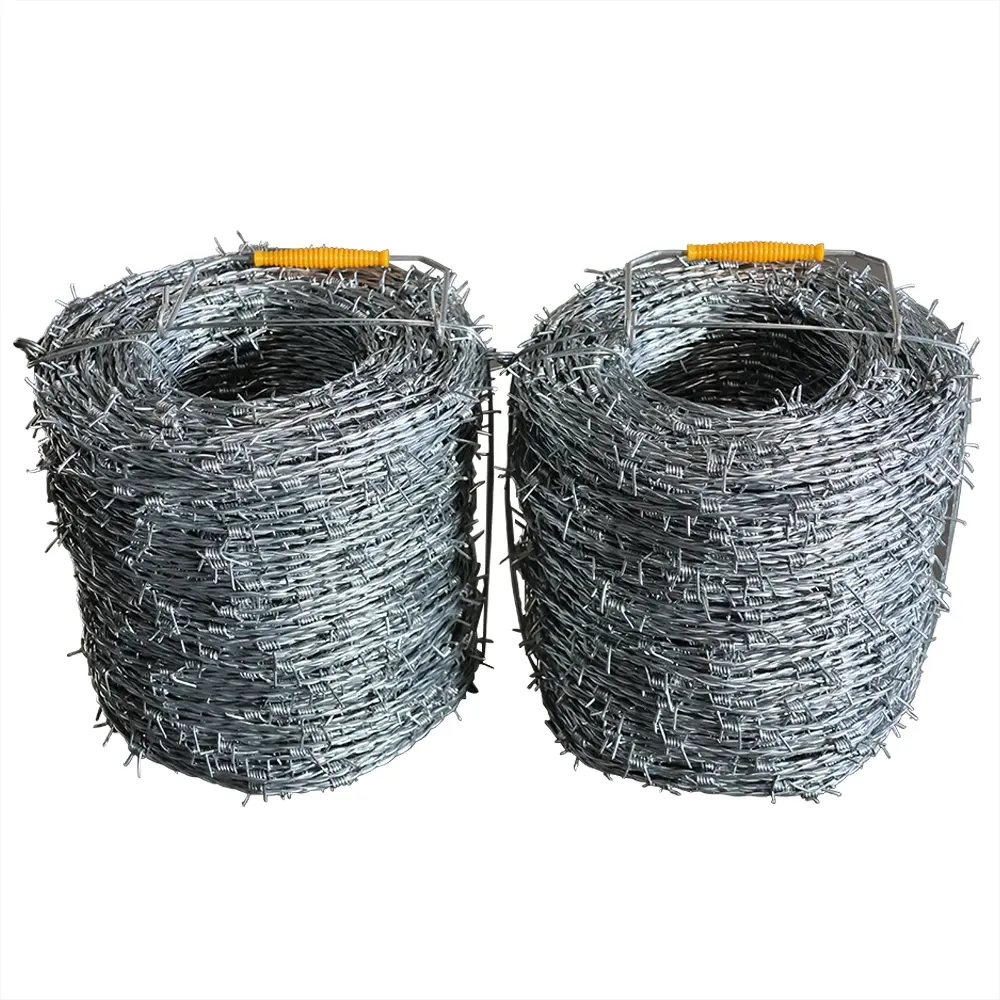
The birth and development of Barbed Wire is a history full of contingency and revolution
In the mid-19th century, American rancher Joseph Gleiden twisted wire into a barbed wire fence to solve the problem of livestock fences, which quickly changed the management mode of animal husbandry. With technological iteration, bare wire fence has evolved from simple manual winding to mass production through automated production lines. Modern Barbed Wire uses high-strength low-carbon steel wire, which has undergone rust prevention treatment such as galvanizing and coating, and is woven with precision machinery to ensure precise and controllable barb spacing and angle, ensuring both protection and durability.
Exquisite structural design endows Barbed Wire with powerful protective capabilities
Its core lies in sharp and pointed spines, which are metal spikes in a serrated or spiral shape, like open thorns, effectively blocking the passage of humans and animals; The interwoven wire mesh provides stable support and resists external pulling. In addition, wire fences can be flexibly adjusted in height and length according to usage scenarios, and can be paired with accessories such as columns and tensioners to form a sturdy protective system. Whether it's a simple temporary fence or a complex permanent defense line, Barbed Wire can quickly build a physical barrier.
From ranches to battlefields, from national borders to private territories, Barbed Wire's applications span across multiple fields
In agriculture and animal husbandry, razor fence has become an ideal choice for dividing pastures and protecting crops, significantly reducing livestock management costs; In the military field, Barbed Wire was once a deadly defense line in trench warfare. In both World Wars, Barbed Wire was combined with machine gun firepower networks to construct impassable death zones; In the field of civil security, Barbed Wire, together with electronic monitoring systems, forms a three-dimensional protection network in airports, prisons, border ports and other places, safeguarding public safety and private property.
Faced with the demands of the new era, Barbed Wire is also continuously innovating and upgrading
The application of new materials combines high strength and lightweight, such as stainless steel material enhancing corrosion resistance and carbon fiber composite material improving toughness; The intelligent transformation integrates it into the modern security system, and the galvanized barbed wire with integrated sensors can monitor destructive behavior in real time and trigger alarms; At the same time, more humanized design concepts are also being promoted, by optimizing the barbed shape to reduce the risk of accidental injury while ensuring protective functions.
Barbed Wire, This "wall of thorns" woven with steel and wisdom, with its unique form and function, witnesses the development and changes of human society. From the invention that solved the problem of ranch fences to the important barrier that safeguards modern social security, Barbed Wire has always fulfilled its responsibilities with a stern attitude. In the future, with the advancement of technology, Barbed Wire will continue to break through innovation and continue its own cold hard legend in the field of maintaining order and ensuring security in a more efficient and intelligent way.
Barbed Wire FAQs
What is Barbed Wire?
Barbed wire is a fence material woven from metal wire with sharp spikes or hooks on the surface, mainly used for protecting, isolating, or blocking human and animal intrusion. Commonly found in high security areas such as military defense, farm fences, and prisons.
What was the earliest use of Barbed Wire?
Originally improved and patented by American inventor Joseph Glidden in 1874, it was mainly used for farm fences to replace traditional wooden fences and control livestock movement range at low cost and high efficiency.
What is the role of Barbed Wire in the military?
During World War I, Barbed Wire was extensively used for battlefield defense, combined with trenches to form an obstacle network that effectively delayed enemy infantry charges, becoming a signature tool of "trench warfare". It is still used for border and military restricted area isolation in modern times.
Is it legal to use Barbed Wire?
Legitimacy varies by region and purpose:
Civilian use: Farms and private territories are usually allowed, but they must comply with safety regulations (such as warning signs).
Military/Border: Authorized by the government for use.
Restrictions: Some countries prohibit its use in public places or residential areas to prevent accidental injury.
How to avoid being harmed by Barbed Wire?
Protective equipment: Wear thick gloves and long sleeved clothing.
Tool assistance: Use pliers or specialized scissors to cut.
Warning signs: Dangerous areas must be clearly marked during installation.
Alternative solution: Non barbed wire mesh or electronic fences can be used for civilian use.
-
Professional Guide to Choosing Nails for Wooden Fence PanelsNewsApr.16,2026
-
PING HONGLIN WIRE MESH CO.,LTD: African Clients Visit Factory, Deepen Cooperation to Build a Global Quality BenchmarkNewsApr.14,2026
-
Guide to Choosing the Best nails for wood trim for CarpentryNewsApr.09,2026
-
Recognized for Excellence: ANPING HONGLIN WIRE MESH Named Alibaba FY2026 TOP Transaction Merchant, Celebrating 35 Years of Manufacturing HeritageNewsApr.07,2026
-
HONGLIN WIRE MESH Showcases at WORLDBEX Philippines 2026, Earning Strong Recognition from Global Builders & DistributorsNewsApr.07,2026
-
Spanish Client Delegation Visits Our Factory for Exchange, Exploring New Cooperation Opportunities in Welded Wire ProductsNewsApr.07,2026


