- Afrikaans
- Albanian
- Amharic
- Arabic
- Azerbaijani
- Belarusian
- Bulgarian
- Croatian
- Czech
- Danish
- Dutch
- English
- Estonian
- Finnish
- French
- German
- Greek
- Hungarian
- Indonesian
- Italian
- Japanese
- Javanese
- Korean
- Latvian
- Lithuanian
- Macedonian
- Malay
- Maltese
- Nepali
- Norwegian
- Persian
- Polish
- Portuguese
- Romanian
- Russian
- Serbian
- Sinhala
- Slovak
- Slovenian
- Spanish
- Swahili
- Swedish
- Tagalog
- Tamil
- Thai
- Turkish
- Ukrainian
- Urdu
- Uzbek
- Vietnamese

The Art of Protection between Longitude and Latitude: The Practical Way of Wire Mesh Fence
In the field of modern protection, Wire Mesh Fence has become an important barrier for ensuring safety and dividing boundaries due to its precise warp and weft weaving and flexible protection characteristics. This mesh structure, interwoven with metal wires, may seem simple, but with its diverse forms and excellent functions, it plays an indispensable role in different scenarios.
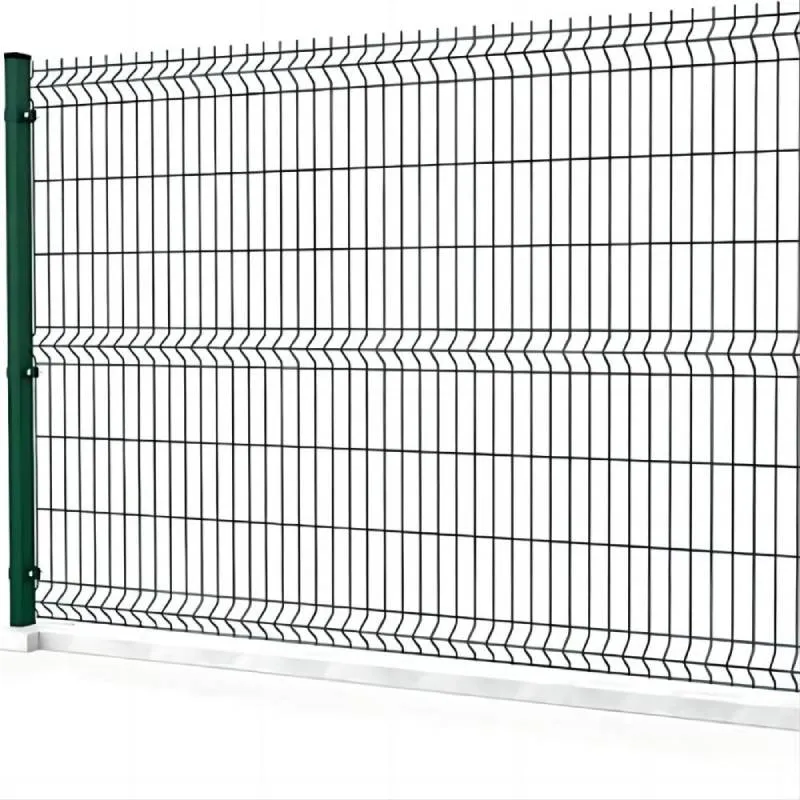
The construction of Wire Mesh Fence embodies the wisdom of materials science and engineering
The core structure of chicken wire fence is made up of interwoven metal wires, and commonly used materials include high-strength steel wire, stainless steel wire, and aluminum alloy wire. There are various weaving techniques, and the welding network is fixed with precise spot welding to ensure firmness and durability; The woven mesh is formed by interweaving warp and weft lines to form a flexible grid, which combines toughness and extensibility. Surface treatment technology further enhances the performance of Wire Mesh Fence, hot-dip galvanizing process endows it with excellent rust prevention ability, and electrostatic spray coating not only enhances corrosion resistance, but also can be customized in various colors to meet different environmental requirements.
Excellent performance makes Wire Mesh Fence stand out in the field of protection
The woven wire fence has good impact resistance, with a tight mesh structure and sturdy materials that can effectively resist external impact and prevent illegal tipping; Transparent design ensures a wide field of view without affecting ventilation and lighting, making it suitable for places with visual requirements. At the same time, Wire Mesh Fence is lightweight and easy to install. Its modular design allows for flexible splicing according to the size of the site, greatly reducing the construction period and lowering installation costs.
From urban to rural areas, from civilian to industrial use, the application scenarios of Wire Mesh Fence are extremely extensive
In urban construction, it serves as a safety barrier for parks and residential areas, ensuring the safety of residents' lives; In the field of transportation, the isolation nets and bridge protection nets on both sides of highways safeguard road traffic safety; In industrial plants, the fencing mesh separating the warehouse perimeter from the workshop not only divides functional areas but also facilitates monitoring and management; In the field of agriculture, protective nets in breeding farms and isolation nets in orchards provide safe growth spaces for livestock and crops.
With the development of technology, Wire Mesh Fence is embarking on a new journey towards intelligence and environmental protection
The embedding of intelligent sensors enables the fence to have intrusion detection capabilities. Once it is damaged, it can immediately trigger an alarm and locate it; The application of nano coating technology further enhances weather resistance and self-cleaning ability, reducing maintenance costs. Meanwhile, the widespread use of recyclable materials and optimization of production processes have reduced their impact on the environment, aligning with the concept of sustainable development.
Green wire fencing, This protective barrier, woven with metal warp and weft, has become an indispensable security guard in modern society with the exquisite construction, practical functions, and constantly innovative technology of Wire Mesh Fence. From traditional physical protection to intelligent comprehensive security, it has always been adapting to the needs of the times. In the future, with the continuous emergence of new materials and technologies, Wire Mesh Fence will continue to protect every boundary of life with a more efficient, intelligent, and environmentally friendly attitude, continuing to write practical legends in the field of protection.
Wire Mesh Fence FAQs
What is Wire Mesh Fence?
Wire Mesh Fence is a mesh structure fence made of metal wires woven or welded together, commonly used in industrial, agricultural, residential, or public areas for isolation, protection, or decoration purposes. Common materials include galvanized iron wire, stainless steel wire, or PVC coated steel wire.
What are the types of Wire Mesh Fences?
It is mainly divided into Welded Wire Mesh and Woven Wire Mesh. The welded mesh structure is sturdy and suitable for protection; Woven nets have good flexibility and are often used for animal fences or gardening. In addition, there is Chain Link Fence, a variant of woven mesh.
What should I pay attention to when installing Wire Mesh Fence?
Confirm the stability of the foundation, and pour concrete foundation for soft soil.
The spacing between columns is generally 23 meters and needs to be fixed vertically.
The mesh surface should be tightened to avoid sagging, and the edges should be fixed with ties or bolts.
It is recommended to choose rust proof materials (such as galvanized or PVC coating) for outdoor use.
How to maintain Wire Mesh Fence?
Regularly inspect for rust or damage, and promptly repair paint or replace local mesh.
Rinse with a soft brush and clean water during cleaning to avoid corrosion of the coating by strong acids and alkalis.
Pay attention to clearing snow in winter to prevent deformation of the mesh surface during load-bearing.
What are the advantages of Wire Mesh Fence compared to Wire Mesh Fence for fencing?
Durability: The metal material is impact resistant and has a long lifespan.
Transparency: The mesh structure does not obstruct the line of sight, making it suitable for places that require monitoring.
Flexibility: Customizable mesh size and height to meet different needs.
Low cost: More economical and easy to install than physical walls or wooden fences.
-
Professional Guide to Choosing Nails for Wooden Fence PanelsNewsApr.16,2026
-
PING HONGLIN WIRE MESH CO.,LTD: African Clients Visit Factory, Deepen Cooperation to Build a Global Quality BenchmarkNewsApr.14,2026
-
Guide to Choosing the Best nails for wood trim for CarpentryNewsApr.09,2026
-
Recognized for Excellence: ANPING HONGLIN WIRE MESH Named Alibaba FY2026 TOP Transaction Merchant, Celebrating 35 Years of Manufacturing HeritageNewsApr.07,2026
-
HONGLIN WIRE MESH Showcases at WORLDBEX Philippines 2026, Earning Strong Recognition from Global Builders & DistributorsNewsApr.07,2026
-
Spanish Client Delegation Visits Our Factory for Exchange, Exploring New Cooperation Opportunities in Welded Wire ProductsNewsApr.07,2026


